
The Greene County Board of Education met on Feb. 12 for its second monthly meeting of 2026 and shared multiple updates from the beginning of the calendar year.
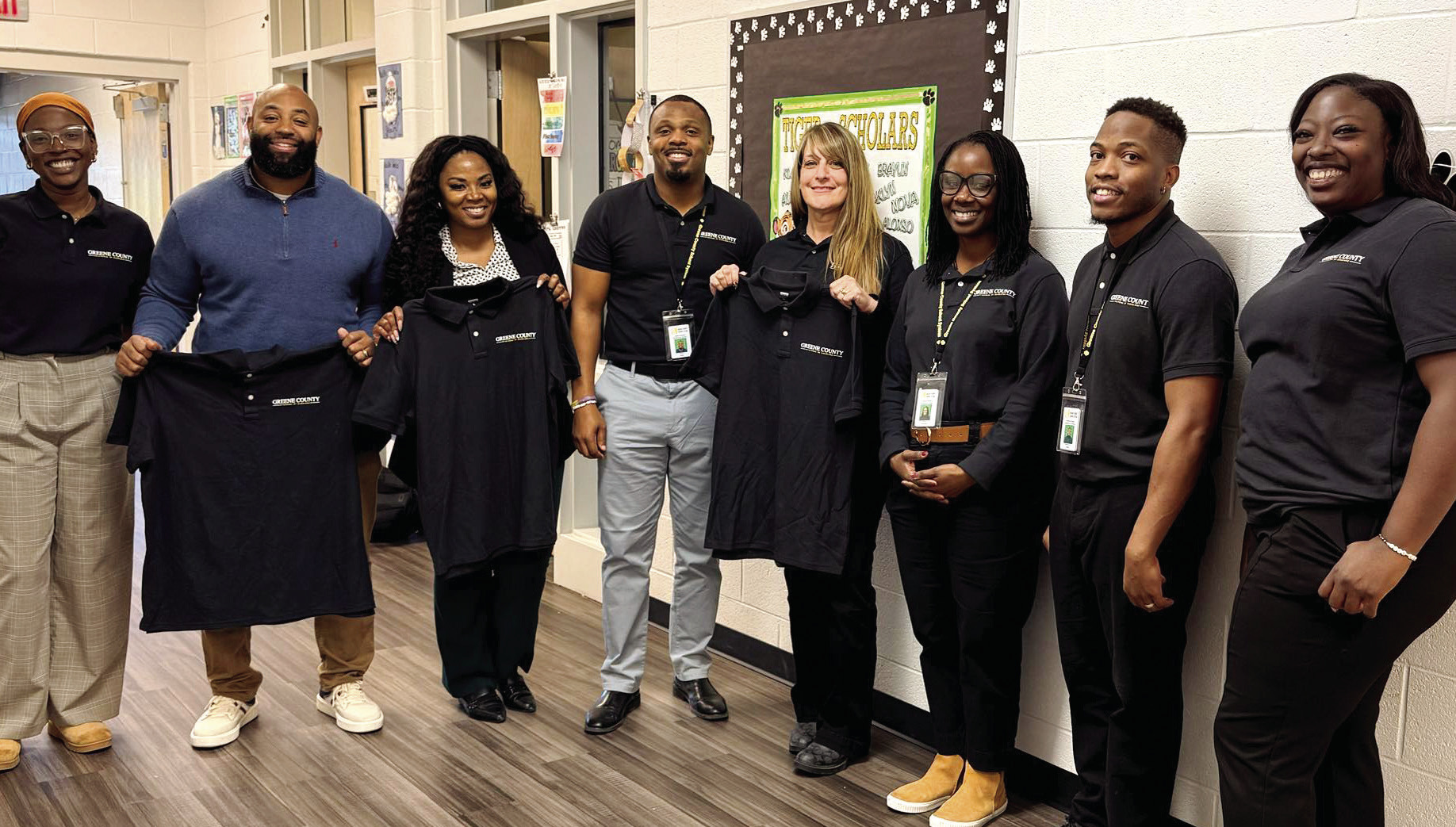
Early in the session, the recently formed GCES organization, Greene County School of Scholars, presented to the board about their mission to improve student learning experiences and behavior.
Per GCSS Superintendent Aaryn Schmuhl, earlier in the fall, the board of education invested in a partnership with Special Education Services Inc. (SESI) to create the Greene County School of Scholars program. He noted that the program is intended to “create a positive culture for students” who may need “additional support” in the classroom.
“Our goal at Greene County Elementary School is for our learning environments to be safe, for our students to be engaged, and for meaningful, rigorous, and joyful learning,” said Dr. Chris Booz, an assistant principal at GCES. “For that to happen, it is important that the behavior of our students makes the environment conducive.”
Booz explained that GCES administration refers to student office referrals as “major incidents,” which “disrupts learning for the student that is having the behavior,” and may “disrupt learning” for their classmates. She says that the School of Scholars team has helped the program’s students reduce referrals, resulting in a sharp decrease in incidents over the last month.
“For the first semester, we averaged about 75 incidents a month; those were costing our students their learning, and they deserve better than that,” Booz said. “We only had 40 incidents during January, and so that is a 53% decline from the first semester; the students that are in the program comprised 53% of the referrals that we had during that [fall period.]”
Booz noted the program takes place within the school in separate classrooms, during the day, because the administration found it important for the participating students to be “included in the school community.”
Following Booz’s introduction on the program, Darius Knox, director of the Greene County School of Scholars, explained the core principles the team uses to encourage positive behavior among its students. Their categories included “forcefield, student government, token economy, normative culture, and alternative to suspension programs.
“Our normative culture is basically our foundation on how we modify our students’ behaviors through ‘norms’, a small-structured environment, and just being fair, firm, and consistent with the students,” Knox said. “Our ‘forcefield’ is how we rate our students every week, broken into three different categories: strength, development, and opportunity; those categories consist of students who have good behavior, good attendance, and good academic performance.”
For the final portion of the presentation, Odette Edwards, the program’s instructional technology coordinator, provided an overview of the “academic interventions” the team has used since the program began.
“When we started, one of the first things we did in our first week was take an extensive look at the performance of the students and their December diagnostic testing,” Edwards said.
“Since we have mixed-level classes, we only have two classrooms; one is kindergarten to second, and the other is third to fifth.”
Overall, Edwards noted that, with only two classrooms for program use, the Greene County School of Scholars team had to consider ways to “cater to the students’ needs.”
She mentioned that they needed to consider their options given varying maturity levels and learning progress, and that the upper-grade class had made good progress.
“We took the decision to start at the midway point, and differentiate up or down,” Edwards said. “Amazingly, since we’ve started, the 3rd-5th grade class has done so well that we had to move to the fifth-grade curriculum and then differentiate down, because most of the students were performing exceedingly well.”