
PUTNAM COUNTY
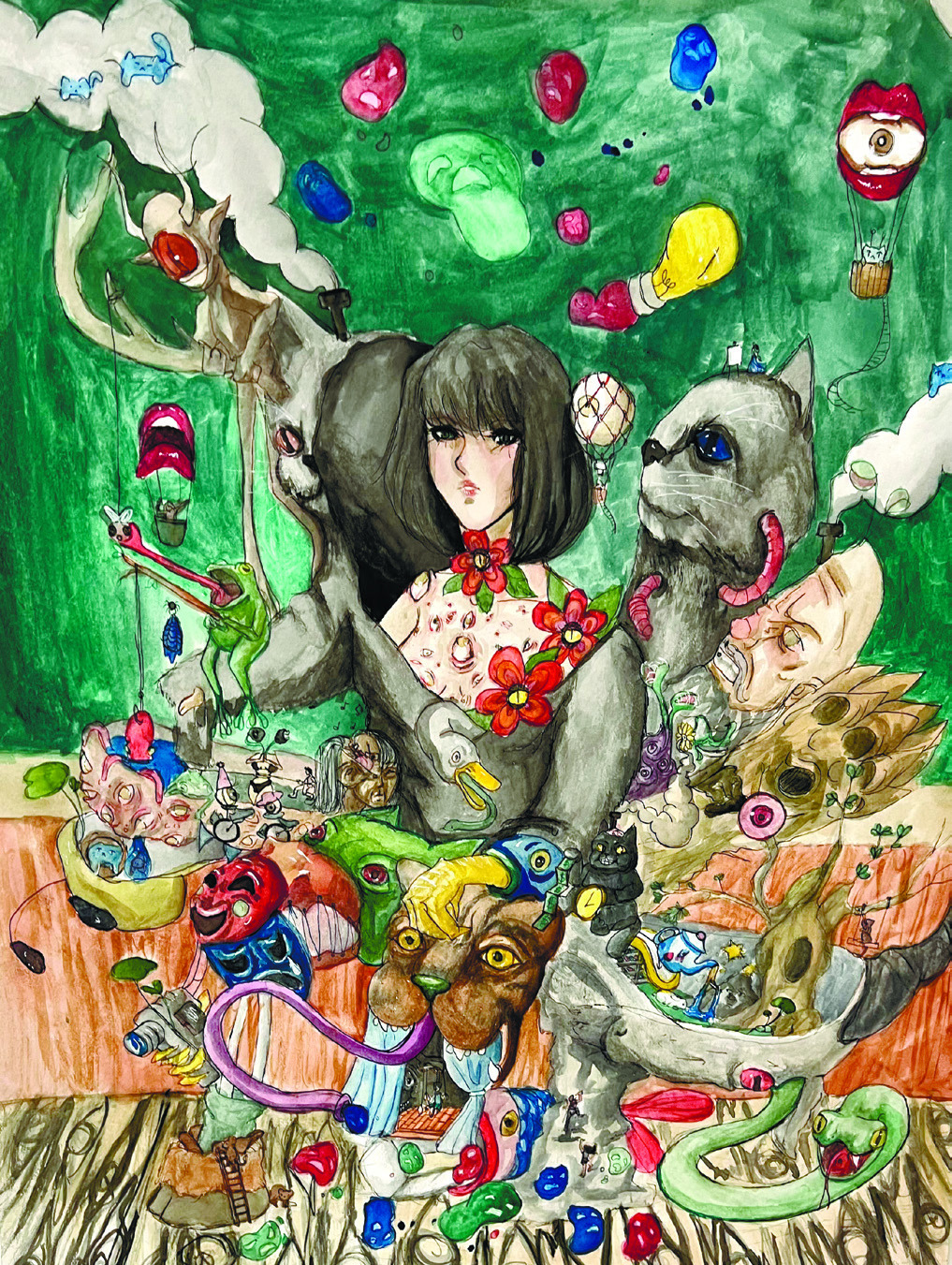

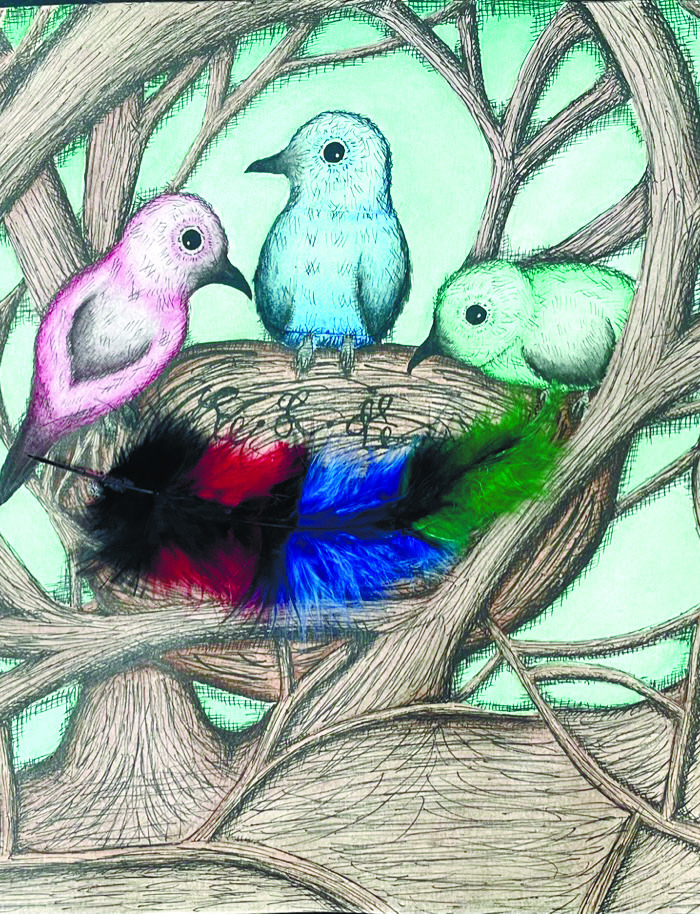
Throughout the 2022‘23 school semesters, Putnam County High School (PCHS) offered an Advanced Placement (AP) art class for the second-straight year, in which students created a portfolio of art that included five completed works and interim submissions as parts of a sustained investigation.
AP art teacher Nancy Mason, who had to qualify herself by passing a Savannah College of Art and Design course, explained the sustained investigation required at least 15 submitted sketches as students built their thoughts toward an artwork. Mason said that might involve showing a technique for depicting texture or blending colors, or “just about anything as they're building their ideas.”
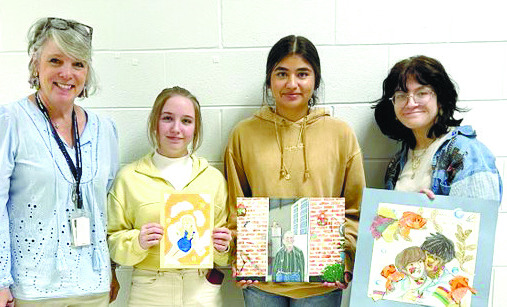
She said it was very interesting for her to see the various tactics each of her three AP students – Leslye Arriola, Arella Cash and Haven Stapp – took in their sustained investigations.
“They were all so different,” Mason stated. “Leslye takes her time, she took forever on a beautiful painting of her grandfather, and she painted the edges of it, and every brick and every leaf. I was kind of like, ‘Ah, they're not going to see that part.’ But that's just part of her style, that precision and attention to detail.”
Mason said she also tried to get her AP students to interact and consider each other's artwork and explain their sustained investigations to each other since some were better at putting things into words than others.
“But they don't always want it to be something that you can say ahead of time. It is something like a tree that just grows,” Mason said. “You know, you wouldn't say, ‘I'm going to do pet portraits and then do this, this, and this.’ They want it to be a question that you ponder and then try this and that until they see the growth of a branch, yet it's all still tied together.”
Mason said each of her AP students more than met her expectations with their year-long projects. Students give written explanations for each artwork, describing their materials, processes, techniques, and experimentation. The portfolios are scored 1-5, and students can receive college credit upon successful completion of the course.
“Having instructed these students since the ninth grade, it was extremely rewarding to see the progression and growth of them as visual artists from the beginning level to the AP level,” Mason said. “Students had to work hard to create quality artworks which conveyed the meaning they intended to show.”
Cash, also a frequent contributor to The Eatonton Messenger, through her high school career, said she enjoyed seeing how her many separate pieces joined together to support her sustained investigation, while also opening her up to artistic experimentation.
“The most challenging things were certainly time management and staying focused,” she admitted. “I was itching to hop projects instead of completing the ones right in front of me. But I am proud of many of my pieces and my openness to trying new mediums.”
Likewise, Arriola said the AP experience allowed and encouraged her to experiment with different art media that she had never used before. And like Cash, she felt the most challenging part of the AP art experience was getting everything done on time.
“I learned that it’s important to pace yourself and set deadlines for when you want to finish your artwork,” Arriola said. “But I am most proud of myself for using art media I wasn’t comfortable with and taking my time on my artworks.”
For Stapp, the most challenging part of AP art was getting over her sense of perfectionism.
“Whenever pencil would smear, I’d mess up with a pen, or colors wouldn’t turn out how I imagined, I struggled to move on in the beginning,” she admitted. “But after taking AP, I realized these small mistakes are only bothering me and most other people wouldn’t even see them. I’m proud that I’ve overcome my fear of things not going perfectly or as intended"
Stapp also said the AP course “really pushed me to make artwork I usually wouldn’t.”
She explained the sustained investigation process made her consider topics for pieces she initially would have considered above her skill level.
“The majority of art I would make in my free time before taking AP didn’t have much meaning. They were usually just drawings of characters I’ve made or art of my favorite musical artists,” she said. “However, the pieces I made for AP art hold more meaning. They each cover topics I’m passionate about, which makes me more attached to them.”
Mason said with the three AP art candidates embedded within a regular class they also inspired other students with their dedication and results.
“Maybe they think they can never do it, but then they realize it just takes time and effort. That's one of the most challenging things with new art students. They just think, oh, it's just this and it's done,” Mason said. “But sometimes something doesn't turn out the way you want, and you have to change it to make it turn out or even start over. Creating art really takes a lot of problem-solving and a lot of perseverance and trial and error.”