
GREENE COUNTY
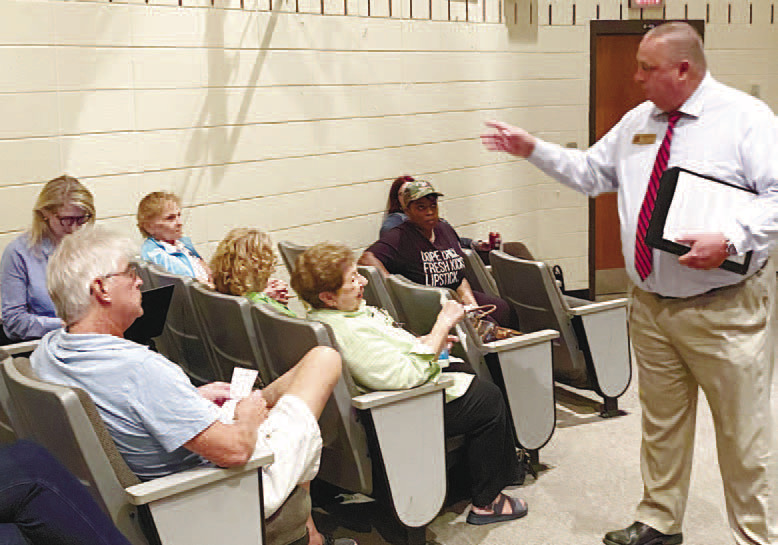
The Greene County School System (GCSS) just concluded its series of three public community planning and input sessions for the development of its next strategic plan.
The school system is only one of a few statewide that initiates public input for the development of its plan. Last week’s final session was held at Lakeside Church and drew a good showing for those seeking input on the system’s plan.
A representative with the Carl Vinson Institute at the University of Georgia spoke to attendees about the importance of community involvement in structuring a strategy that is both reflective and purposeful for their school district. It is essential the community has input to crafting a vision that supports new initiatives developed for the district.
GCSS is comprised of four schools in the county and includes Lake Oconee Academy, Greene County High School, Anita Carson Middle School and Greene County Primary School, serving the cities of Greensboro, Siloam, Union Point, White Plaines and Woodville.
It operates and is primarily supported by Greene County taxpayers and key grant programs. The funding has helped GCSS offer additional training, instruction, technology and other critical services. It was recently named a 2022 Advanced Placement Honor School by the Georgia Department of Education.
Lake Oconee Academy, although part of the GCSS and supported by tax dollars, operates independently as a charter school and does not include a formal strategic planning process. The BOE recently announced a 2022 rollback millage rate of 11.648, down from 12.454 in 2021. This is a rate reduction of 0.806 for the current year.
The strategic plan outline was shared at September’s Board of Education monthly meeting. It included a focus on specific performance objectives which include increasing student’s mastery of the curriculum, improving the rigor of students, fostering the emotional and social growth of students, operational and organizational effectiveness, identifying, developing, and retaining high-performing staff, culture, and climate, establish student self-advocacy and strengthen parental involvement and support getting students fluent in reading and math basics by third grade.
Four groups were formed with attendees who were tasked with addressing any new initiatives, visions for the future of the district, community involvement, and groundbreaking ideas. Additionally, the groups were asked to consider what GCSS can do to help foster community development for the district.
Among many good ideas presented back for inclusion in the plan included less reliance on computers and a bigger focus on one-on-one classroom learning. Respondents claimed that many children in the district are being raised by grandparents who lack computer skills. It was suggested that GCSS provide and offer some computer basics training or a computer science module for these caregivers to better assist in the educational process.
Another idea surfaced to help further develop programs in the district to help graduate students. It would complement the district’s college and career academy efforts presently underway. Also cited were programs to better engage parental participation and communication, working with small community governments, better communication among the district’s cities it serves, and routine presentations at all city council meetings.
The plan will now be developed with specific action items incorporating these and other ideas. It will be shared with the communities it serves following a special Educational Summit to be scheduled later. Metric accountability will be routinely conducted throughout the continuous three-year plan.