
Property owner discusses challenges to rebuilding
MAD Hospitality plans on making drastic changes in the near future, involving the demolition of one of downtown Madison’s more popular buildings.
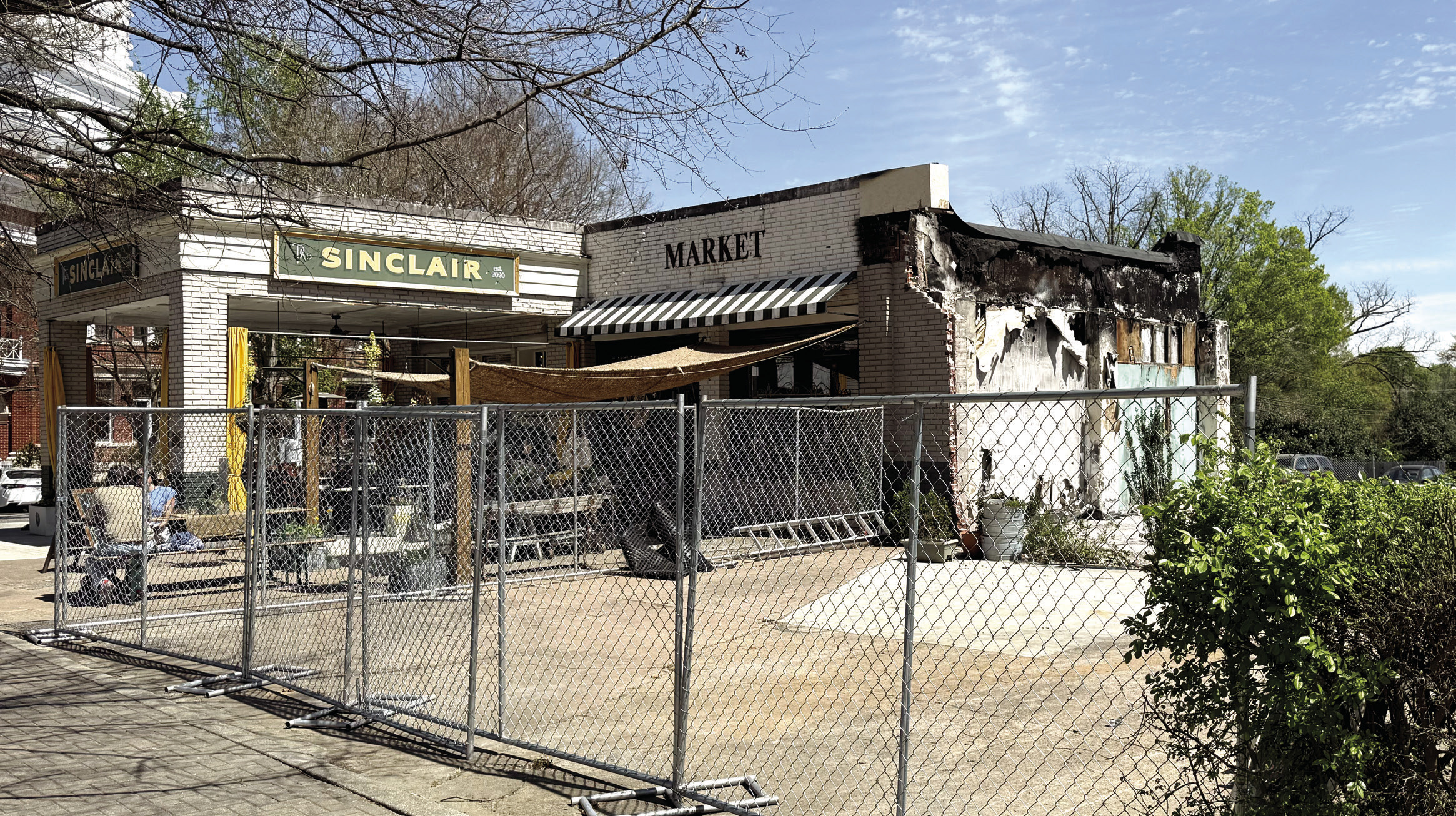
MAD Hospitality’s Betty Gene’s restaurant was formerly located at 292 Hancock St., alongside neighboring units, The Sinclair, and Community Roots Market. The diner was forced to relocate as a pop-up at the Buggy Works event space following a fire that broke out in the original building last summer.
MAD Hospitality recently demolished the remains of the former Betty Gene’s plot, eight months after the devastating fire. The Sinclair and Community Roots Market took significantly less damage in the incident and eventually returned to normal operations in their portions of the building.
Preston Snyder, owner of MAD Hospitality and Thomas Preston Real Estate LLC, said a full demolition of the building must take place to receive the final insurance payments for the fire damage. Therefore, the Sinclair and Community Roots markets will close in the future, as their current locations are part of the upcoming demolition.
“We have tried to preserve the building’s remains to the extent possible to keep the Sinclair and a pop-up version of Community Roots Market open while we pursue development entitlements from the City of Madison to rebuild,” Snyder said. “The space is atypically large for a downtown site, so it required variances for redevelopment.”
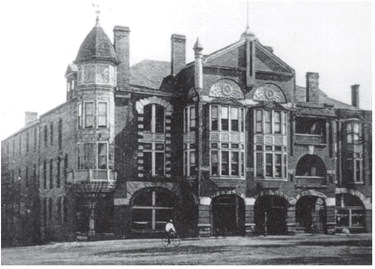
The space occupied by the cafe and market originally housed the New Morgan Hotel, built in 1892 and operating there until it burned down in 1930.
Snyder noted that the current building is registered with the Brownfield program of the Georgia Environmental Protection Division, and the space was previously contaminated by debris from the fire that destroyed the New Morgan Hotel.
Therefore, when Snyder purchased the site, he entered into a prospective purchaser agreement with EPD for the property, and a full cleanup was conducted, except for the “existing building footprint,” which included a “gas station, tractor, and auto shop.”
“We established interim uses for the restaurants and offices, but given its size and zoning, it was always anticipated to be a redevelopment project, and we agreed to clean up the balance of the site (under the footprint) at that time,” Snyder said. “We delayed the process to this point, in hopes that it could be completed as part of a redevelopment.”
Following the July fire, Snyder said he hoped to build a new “mixed-use project” to replace the destroyed space and “complement it with workforce and life cycle housing, behind and above the retail, in the form of loft-style apartments.”
“The project drew design inspiration from the old hotel, but as required in the district under Department of the Interior guidelines, it was modern in design, which was unanimously approved by the Historic Preservation Commission,” Snyder said. “It was to sit on the footprint of the former hotel, and we had acquired an adjacent parcel to ensure we could park the entire project on site.”
The mixed-use project passed unanimously through the Planning and Development department before the Historic Preservation Commission, but ultimately halted at the Madison City Council’s March 9 meeting.
“City Council rejected the Historic Preservation Commission’s recommendations, denied one request, passed a parking conditional use, and tabled a ‘massing variance’ after a failed attempt to deny it entirely,” Snyder said.
“Because the city council did not approve the required variances, we are proceeding with the work to meet our obligations to the state. That process led to the demolition of the unoccupied ruin at the former Betty Gene’s location to get it underway.”
Overall, Snyder said that following the July fire, MAD Hospitality has worked to maintain The Sinclair and Community Roots Market on a pop-up basis and felt it was important to do so for the businesses, employees, and the community.
Snyder is currently unsure of the final dates for both the total demolition and the units’ closings, and said the closings are required to “complete their obligations for the site.” He noted that he is also unsure whether The Sinclair and Community Roots will reopen after demolition, but hopes they will.
“Unfortunately, we will not be able to roll that work directly into a redevelopment, given the impasse on the entitlements, and we hoped to rebuild and put them back in the same location, but in a new building,” Snyder said. “Those plans have been scuttled at this point, and we are not able to determine where or whether they might be recreated, or whether it makes any sense to attempt to do so at this time.”