

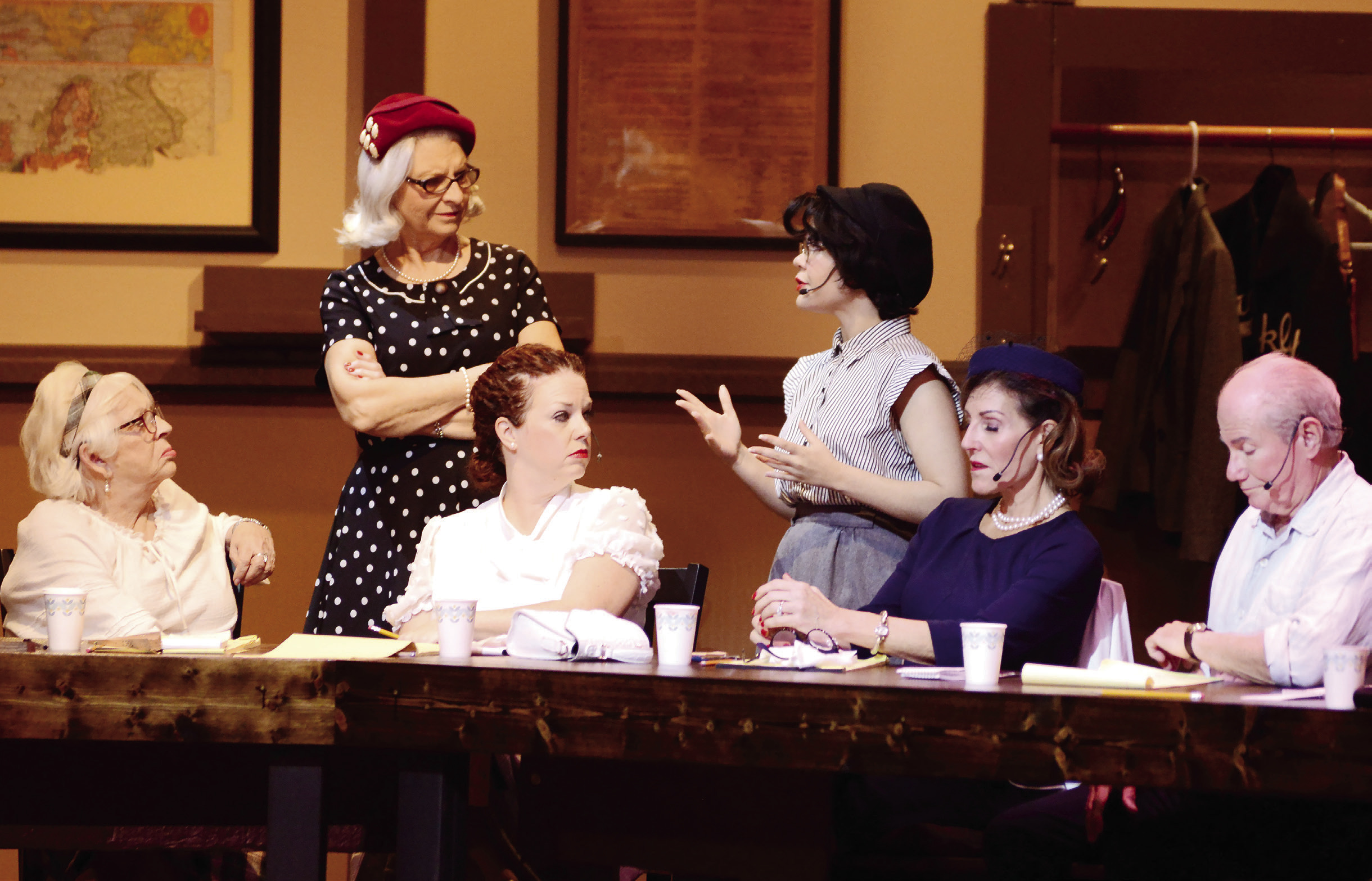
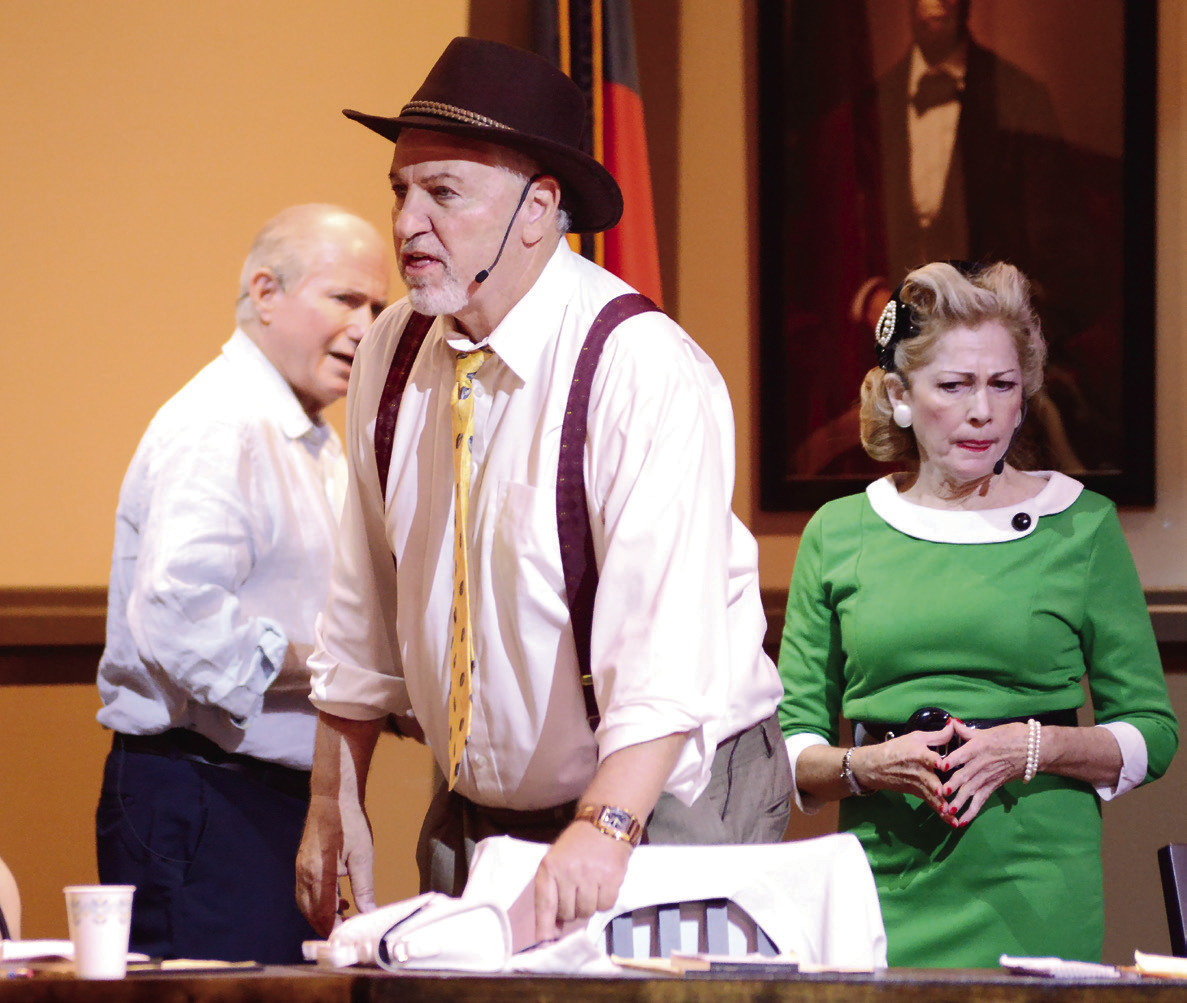
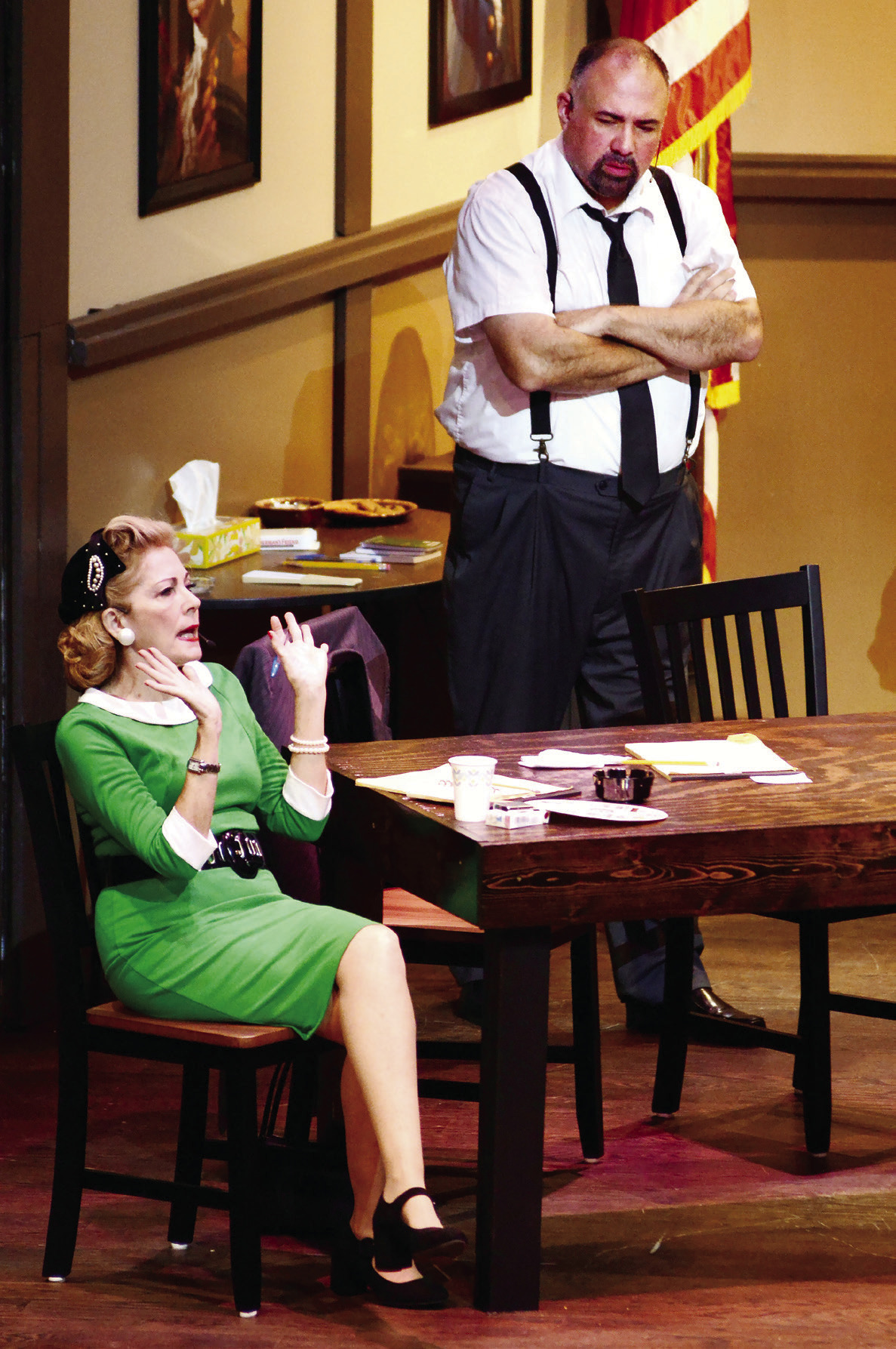
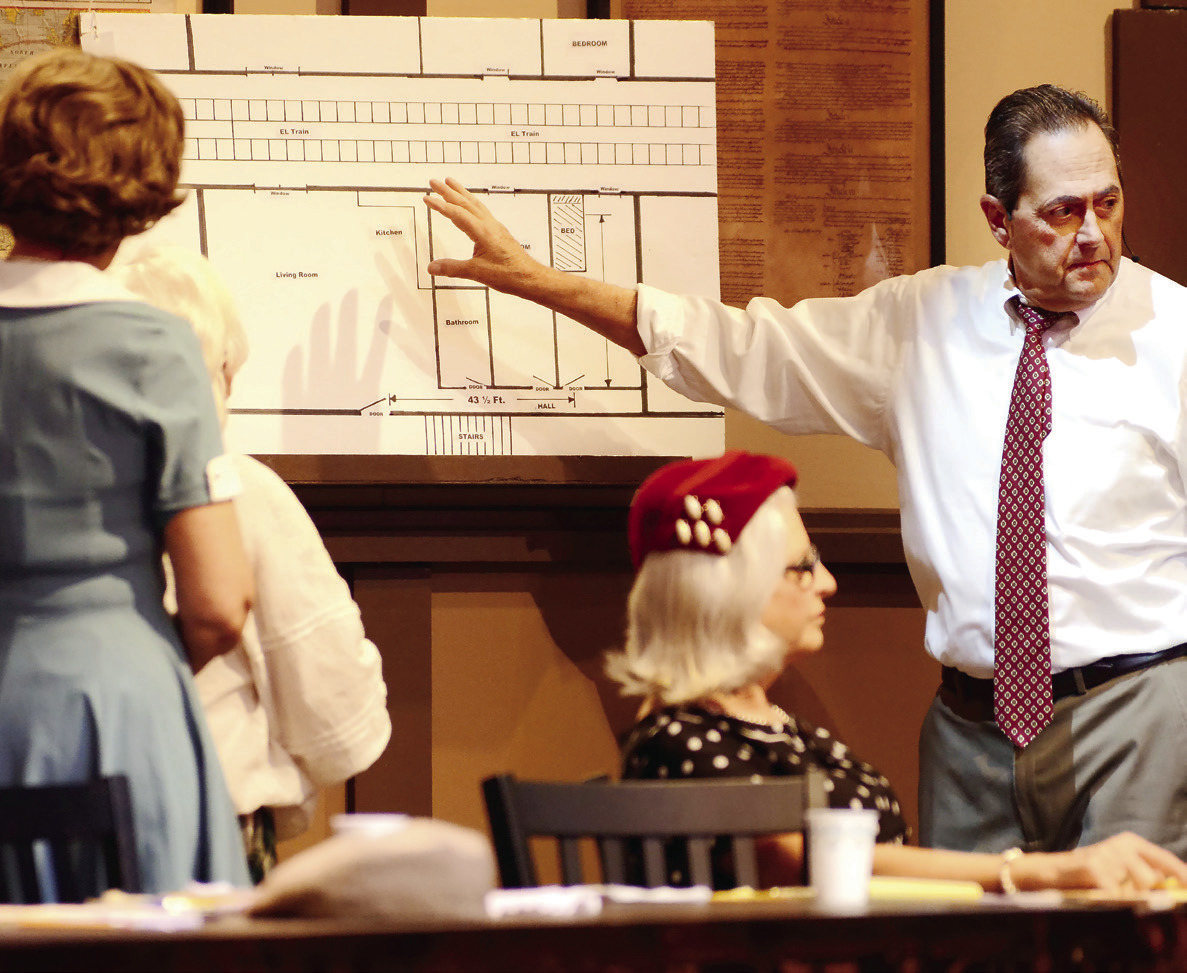
The Plaza Alliance for the Performing Arts (PAPA) completed its six-show run of “Twelve Angry Jurors” Sunday night at The Plaza Arts Center, with each performance bringing its own energy and feedback from the audience to its cast of 15 actors.
The play, originally written as a teleplay in 1954 as “12 Angry Men,” by Reginald Rose, deals with a jury deliberating the life-or-death fate of a 19-year-old son accused of stabbing his father to death, and the machinations of deliberation that repeatedly sway between guilty and not-guilty votes, often based on emotional outbursts and responses.
The audience, about three-quarters full Sunday afternoon, responded accordingly and became fully vested in the emotion and actions, at one point dramatically inhaling and holding its collective breath when one juror picked up the murder weapon, a switchblade knife, and appeared poised to strike in a demonstration of its lethality.
“Opening night just has an energy to it … I was a competitive swimmer, still am, and when you open the first day of any play it’s just like the feeling you get before you step up on the blocks, getting ready to race. It’s butterflies, it’s adrenaline, and it helps you know that you’re alive,” said Bill Dudley, who played the conflicted Juror No. 3 who clashed with Juror No. 8, veteran actor Lou Benjamin.
“There’s a lot of anticipation building up to opening night, so to me it’s always opening night and then closing night, as this was,” Dudley continued. “This one has some bittersweet feel to it. So, you’re glad, you’re ready for it to be over. But by the same token, hey, you put a lot of work into this, learning the lines and the action. It’s a very demanding play.”
For Benjamin, whose character was convinced from the start that the young man was not guilty, the play tested not only the stamina and abilities of everyone on stage but also those of the audience, too.
“This is a tough play to put on. There’s a lot of dialogue and no action, so timing is important, and the emotions are important, and so is the chemistry of people on stage,” Benjamin explained. “And the highest compliment we can get is if people say they feel like they’re actually in a jury room.”
Benjamin observed Sunday night’s audience was not the biggest crowd for the show at The Plaza, and he admitted “the bigger the crowd, the more you feed off of it,” but he also pointed out it was a very engaged audience that paid attention to the details of both dialogue and action.
“All the crowds we had were into it and reacted at the right times, in the right way. And you may have noticed that there were actually a bunch of laughs,” Benjamin said. “I’m convinced a lot of those are uncomfortable laughs because we’re dealing with stuff people don’t really want to face sometimes. A number of people after the shows have told us, ‘Hey, the message was timely and it’s a great thing to listen to, especially in today’s climate.’ Comments like that really resonate with us.”
Co-directors Sarah Daly Weir and Dennis McClain revealed “Twelve Angry Jurors,” rewritten in later years to diversify the cast from its 1950s, man-centric ethos, prompted some additional changes, custom-made by PAPA. Daly Weir said more than 40 actors initially auditioned for the play and a couple were so impressive that she and McClain took it upon themselves to add a little dialogue to give the “extras” a little more time in the spotlight.
“As far as the judge (Dan Kniffen) was concerned, that was a voiceover,” Daly Weir explained of having the judge come out in front of the curtain, welcoming the audience and giving courtroom “instructions” before the play actually started. He returned at intermission, too, and served a similar role to provide an air of authority and formality to common theatrical practices.
Similarly, a couple of extra lines were provided for the clerk of the court, played in her theater debut by Robin Cassidy, and PAPA veteran Doug Ivey who both impressed the directors with their auditions.
For his part, McClain said he approaches directing “more like a TV watcher” than as a traditional stage director. He explained he likes to sit in the audience and watch for authenticity in the details. If he thinks everything looks good, he just lets the actors determine the action.
“If you do everything that’s written in the script, exactly the way they wrote it in the script, people will leave this theater and say you did a good job. That’s a good play,” McClain said. “But if you do all the big things that are in the script and all the little bitty things that aren’t, like having a conversation in the background, making the audience believe it’s real, then eventually they will forget it’s a play and will get immersed in it. They’ll leave saying, ‘That’s the best damn thing I’ve ever seen.’”