
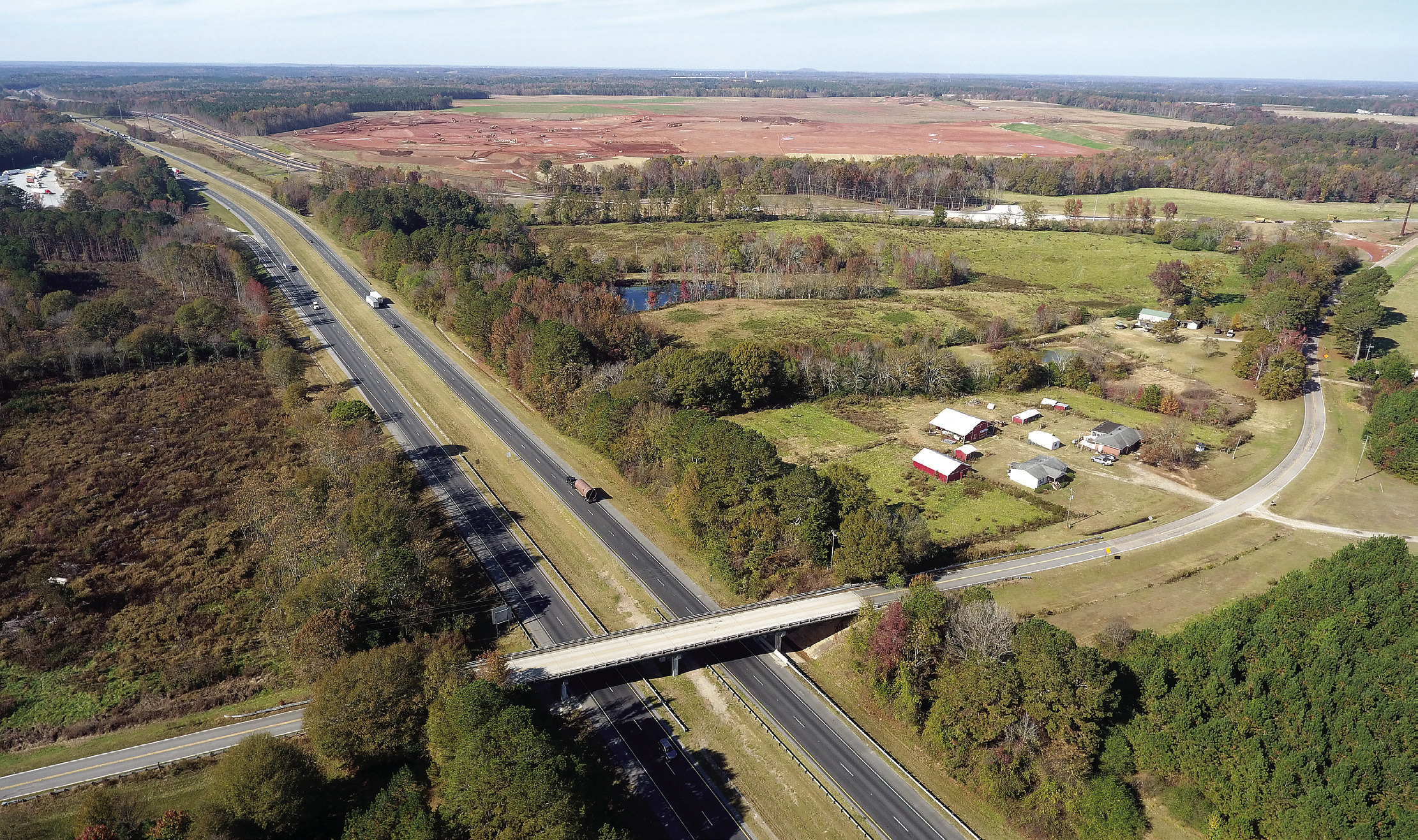
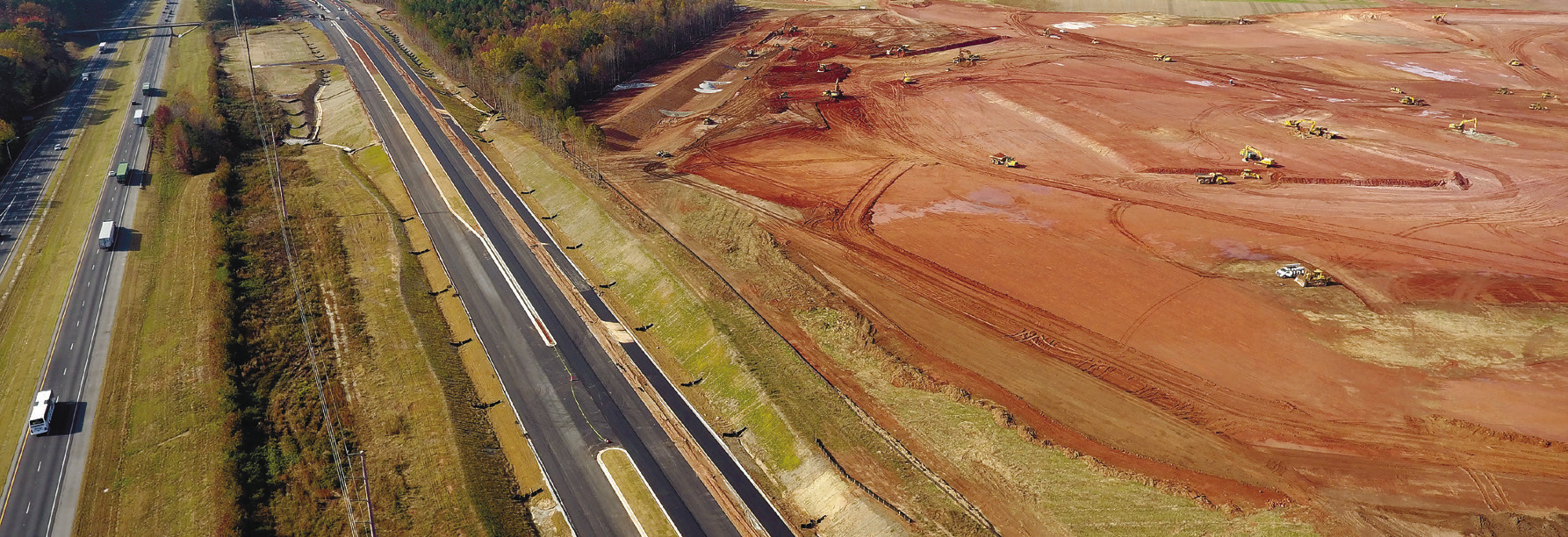
Georgia is one step closer to becoming the epicenter of electric vehicle manufacturing after the state and Rivian cleared legal hurdles that sought to derail the manufacturing plant in Morgan and Walton counties. The manufacturer now has long-term rights to nearly 2,000 acres in the Stanton Springs North project.
The Georgia Department of Economic Development (GDEcD) and the Joint Development Authority of Jasper, Morgan, Newton, and Walton Counties (JDA) announced Nov. 9 that they have closed on bonds with Rivian and have executed the rental agreement. The deal was first announced in 2021.
“It’s a great day in Georgia as we close and issue the bonds for the Rivian project,” the statement reads. “Renting the site to Rivian is the next step in delivering this generational opportunity, and Georgians in Jasper, Morgan, Newton, and Walton counties and beyond look forward to $5 billion in investment and 7,500 good-paying jobs that this innovative, American manufacturing company will bring.”
Site grading work is set for the coming weeks with construction slated for early 2024.
Rivian was set to pay its first $1.5 million in Payment instead of Taxes (PILOT) payments, which are set to continue for the next six years. That amount is to increase to $12 million in year seven.
“Over the 25-year abatement period, Rivian will pay at least $300 million in PILOT/tax revenue payments,” according to GDEcD. “Under the agreements, if Rivian exceeds its initial investment commitment of $5 billion, then the PILOT payments also increase based on a defined schedule in the agreement.”
The economic development project is the second largest in Georgia's history and hopes to produce 400,000 vehicles annually once operational. It will include a QuickStart facility to be constructed for training purposes.
The Georgia Department of Transportation plans to construct a new interchange on I-20 at Old Mill Road and a four-lane frontage road running parallel to the interstate, which will connect Highway 278 to Old Mill Road.
Rivian is also building a network of charging stations in Georgia that it claims are 100% powered by renewable energy. The chargers can provide up to 140 miles of range in 20 minutes for some models, and locations are meant to provide range for those who want to explore destinations in Georgia.
According to a map on its website, Rivian has charging stations available in Atlanta, Covington, Macon, Augusta, and Pooler, just outside Savannah.
Legal background
Groups in Morgan County have made several efforts to stall the Rivian deal, going up to the Georgia Court of Appeals to seek relief.
In Fulton County Superior Court, an April 21 ruling from Judge Thomas A. Cox Jr. said the state is entitled to a bond of $364,619.55 before a lawsuit concerning zoning for the Morgan County portion of the project can continue because it is unlikely to succeed.
After the judge’s ruling, the GDEcD and JDA issued a joint statement, calling the plaintiff’s effort to derail the project meritless and insisting that it is wasting taxpayer money.
“Rivian’s manufacturing facility is being constructed on State-owned land for the governmental purpose of economic development,” the statement reads. “As Judge Cox confirmed, it is well-established in Georgia law that State-owned property is exempt from local zoning and other regulations when it is used for a governmental purpose.”
Another case that has been argued before the Georgia Court of Appeals questions whether $700 million in property tax breaks related to the Rivian project are legal.
Ocmulgee Judicial Circuit Chief Judge Brenda Trammell ruled in September 2022 against validating bonds for Rivian, a process that is typically a rubber stamp for economic development.
That decision was appealed and argued in front of the court of appeals by former Georgia Supreme Court Chief Justice Harold Melton, who represented the appellants.
Trammell’s concerns were largely due to Rivian’s questionable financial backing.
“Rivian’s cash reserves are quickly drying up, thus casting serious doubt on whether it will be able to commence, let alone complete, the project,” Trammell wrote in her opinion.
The Court of Appeals issued a ruling on April 28 overturning the decision, stating that the trial court was “beyond the scope of what the superior court could consider in deciding whether to validate the bonds.”
“We agree that the superior court erred in denying validation of the bonds and the Project based on a finding that the JDA,” the ruling stated, “and the State did not make a prima facie case that the bonds were sound, feasible, and reasonable.”
The Court of Appeals also upheld the state’s opinion that the rental agreement is an appropriate way to transfer control of the property to Rivian.
“Although Rivian must pay for buildings and improvements, the state holds full ownership of the buildings and restricts how Rivian can use the property, which is inconsistent with an estate for years,” the decision states. “Rivian must comply with certain specified zoning and environmental provisions, including limitations on the amount of impervious surface at the site, stormwater detention structures, road setbacks, and tree protection ordinances.”
The JDA and GDEcD applauded the court’s decision that ultimately gave the green light to closing on the bonds and executing the rental agreement.
“The order concludes that the state and JDA provided unrefuted evidence that this project is not only a benefit to the local community, but its scale on a statewide level is considered the ‘holy grail’ of economic development projects, as it will create 7,500 new jobs, additional tax revenue, and the likelihood of suppliers locating to the area,” the agencies said in a statement following the court’s decision.