
PUTNAM COUNTY
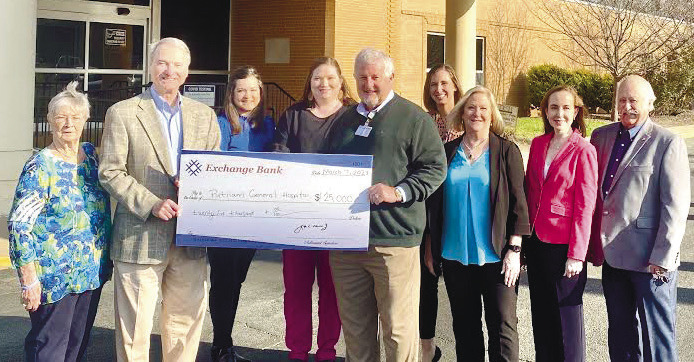
Time is running out for local businesses and individuals to donate to Putnam General Hospital (PGH) through this year’s Georgia HEART (Helping Enhance Access to Rural Treatment) program that allows taxpayers to designate where some or all of their annual state tax obligation is spent.
Though the official HEART deadline remains almost half a year away on Dec. 31, PGH Foundation Director Tracy Stickley points out that only about $5 million of a maximum of $75 million in annual tax credits remain available at this time.
“Anyone that’s thinking of doing this needs to do it ASAP,” Stickley declares. “Once the credits are claimed, that’s it. And that could be tomorrow or next week, or it could be a month from now, but there’s no doubt they’ll all get claimed.”
Stickley says the most PGH ever received through HEART totaled about $2.8 million a few years ago, which primarily paid for renovating and modernizing its emergency room facilities. So far, about $1.3 million in tax credits have been committed to PGH this year.
The HEART program not only benefits the hospital directly, it also can significantly lessen the annual monetary burden for Putnam County. Stickley explains the county helps pay to offset PGH losses incurred in treating patients who don’t have insurance, a sum that typically approaches $2 million by year’s end.
“Unfortunately, we don’t have a strong commercial base to have enough insured patients, so Georgia HEART can greatly alleviate that county burden and it’s a way to take care of others. It keeps costs down for everybody,” she adds.
Individual taxpayers are able to offset up to $5,000 in taxes, while couples filing jointly and most self-owned businesses can offset up to $10,000 in state tax obligations. However, larger C-Corps, trusts, or pass-through entities can offset up to 75% of their annual tax liabilities through HEART and then turn around and write off their HEART donation as a federal tax deduction.
“Georgia HEART does not cost taxpayers anything extra,” Stickley emphasized. “It replaces taxes that you’re already obligated to pay to the Georgia Department of Revenue. But it offers a way to keep your tax dollars in the local community, dollar for dollar as a tax credit. So you pay it before the end of the year, before December 31st, and then you will get a certificate number and that gets your payment knocked off the taxes that you will owe when you file 2023 taxes in 2024.”
After applying to the HEART program and receiving state approval, taxpayers have until year’s end to submit payment for the approved amount and send it to the state. Stickley suggests including the HEART certificate number if paying by check, but as long as HEART is designated somewhere, the state will cross-reference the payment with the taxpayer’s name to ensure proper credit is received.
Plus, Stickley says she sends all HEART donors a thank-you note and adds their names to the hospital’s official list, which may be published locally.
“Of course, if anyone wants to be anonymous, they can, but I would never encourage anyone to be anonymous because you’d be surprised what having your name on there does. It has a ripple effect and encourages others to give,” Stickley says. “And I don’t care if you give a hundred dollars or 10-thousand dollars; get your name on the list, because that tells other people that you support your hospital.
“There’s really no reason not to do this,” she adds. “You’re going to pay this money anyway and with Georgia HEART you get to say where your money actually goes, and it supports the hospital right here in your county.”
To learn more about HEART visit online at georgiaheart.org or call Stickley at 706-923-2028.