
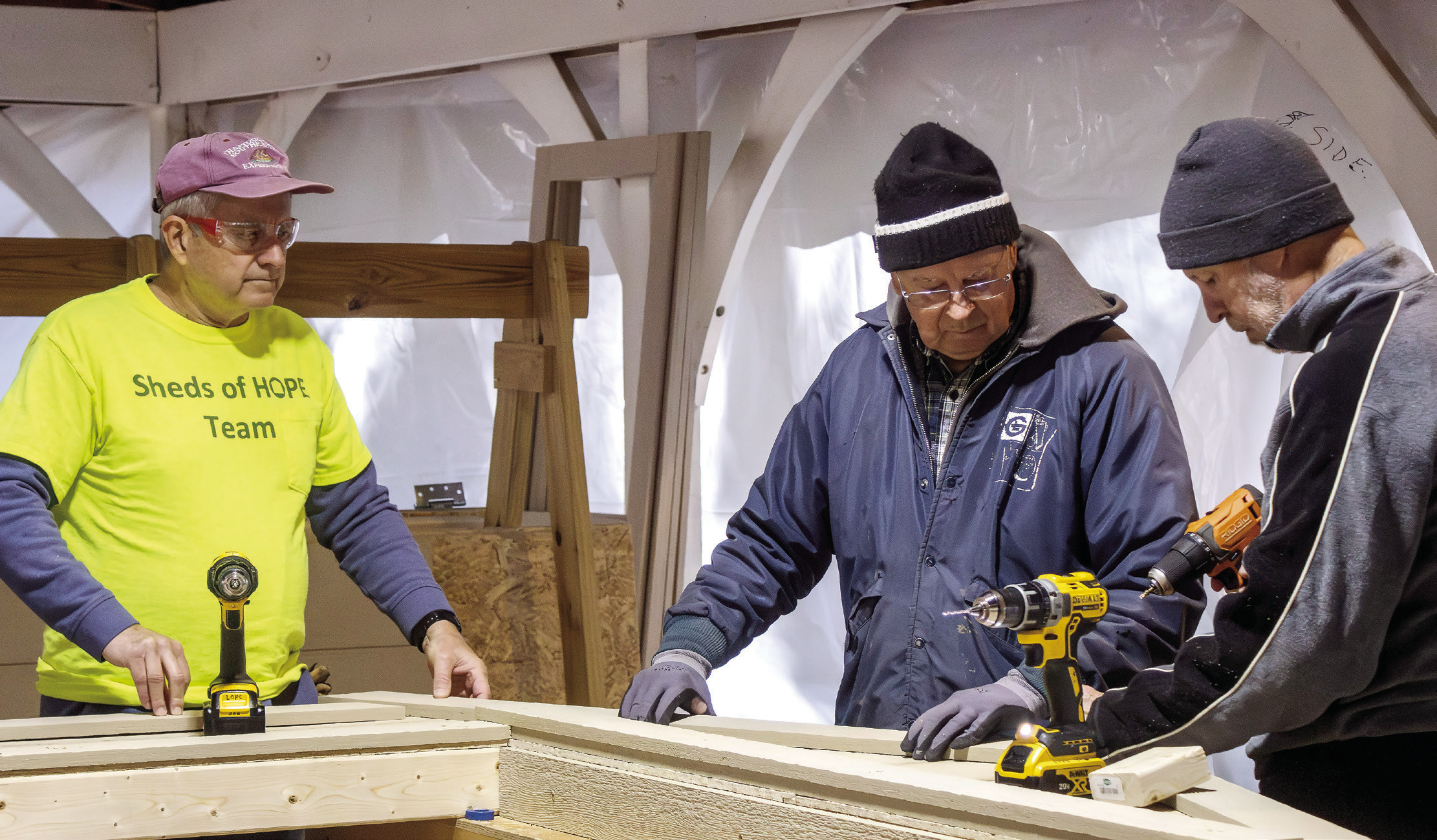
Sheds of Hope is a disaster relief ministry by Lake Oconee Presbyterian Church (LOPC) that provides and constructs dry storage sheds for families impacted by natural disasters.
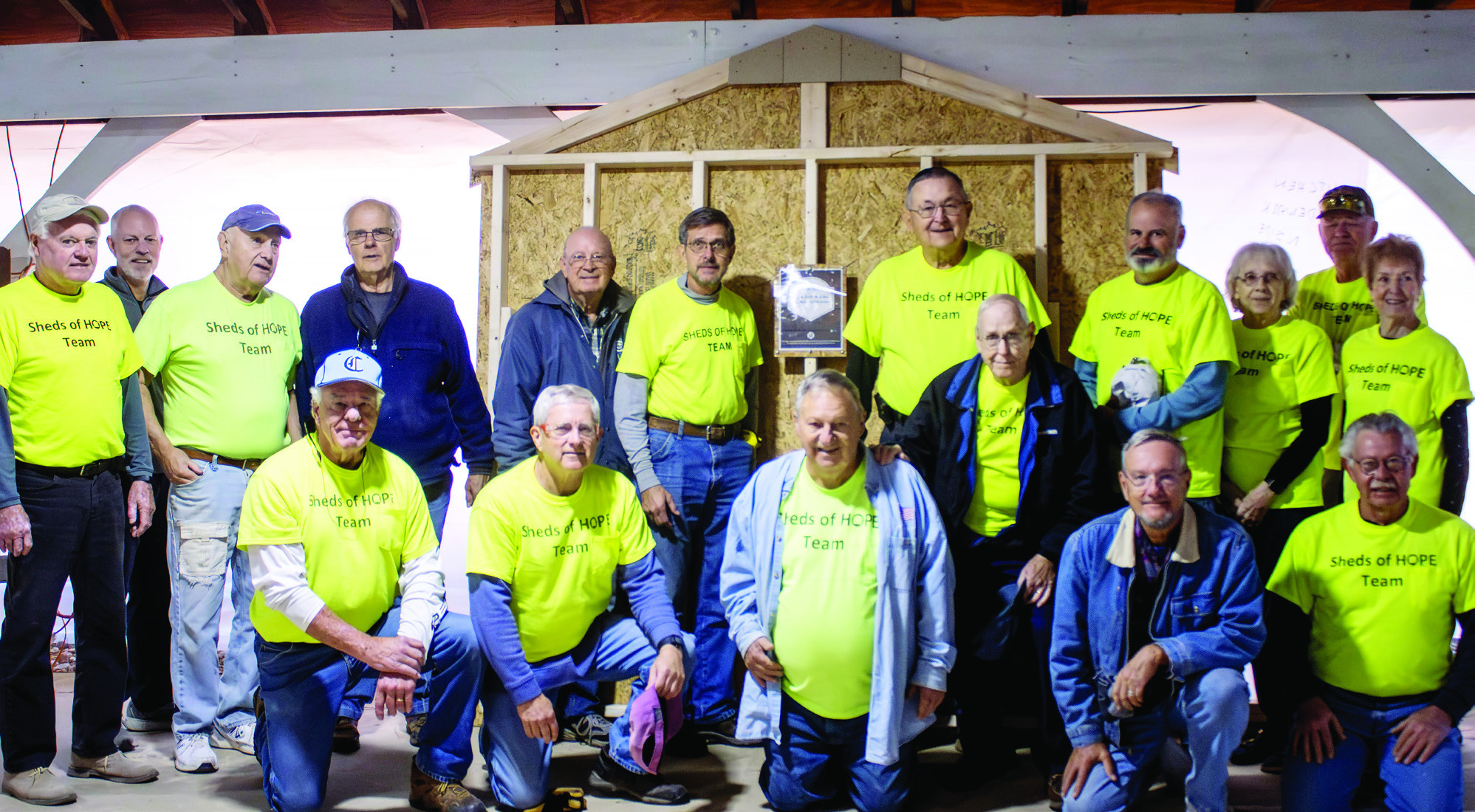
The volunteer-based group started in 2017 and on Nov. 12 commemorated building its 200th shed.
Many current and former LOPC members participate in the ministry, which involves assembling the sheds for six months of the year. The ministry also includes two women who volunteer to cook lunch for construction crews on each seven-hour build day. Volunteers typically build about four sheds each month.
LOPC team leader Dick Forrester said he got the idea of starting the local ministry after speaking with a former pastor for the Presbyterian Church of America, who helped operate Sheds of Hope on a larger, multi-state scale.
“His vision was that churches like us would build Sheds of Hope, so when people lost their homes to disaster, volunteers would work on behalf of the local church in that area to deliver and set up sheds for the families,” Forrester said.
Forrester also said LOPC’s Sheds of Hope invites local youth groups to help during the April and October build periods.
“We try to get in contact with kids in the community, and we invite them to come join us for the build,” Forrester said. “Our job then is to stand back and let the young visitors have as much hands-on experience as possible. We hope it’s been a fun experience for them, because it really has been for us.”
To build the storage units, the Sheds of Hope team orders the necessary supplies, made possible by financial donations.
Once construction is complete, the sheds are placed in the LOPC Sheds of Hope warehouse in Rome, Ga. Mission to North America Disaster Response, the Presbyterian Church of America’s disaster response organization, typically collects the sheds from LOPC and stores them at the storage facility until a family needs one.
So far, LOPC’s Sheds of Hope has distributed its work to several Southeastern states, including Mississippi, Tennessee, Texas, Louisiana, and Missouri.
“So [the shed segments] are shrink-wrapped at the warehouse, and then when a disaster occurs, they’re shipped to a central point in the disaster site,” Forrester said. “Local churches will then help identify families in need and screen them; then the other volunteers will take the shed to that family and set it up.”
Forrester said the setup at a disaster site typically takes about two hours to complete.
With the celebration of the local ministry’s 200th anniversary, Forrester said he looks forward to continuing his work in constructing storage units for families in need. He said that working in the ministry has also fostered strong relationships among the volunteers.
“It’s a milestone, and not a destination, so we’re going to continue to build sheds and do our best to help folks that need it,” Forrester said. “We have people on the team who don’t go to our church here, but now we know each other better, and friendships are born. This gives people an opportunity to get involved, and once they’re involved here, we find that that spills over into the rest of the church.”