

The Putnam County Republican Party presented a candidate forum on Oct. 12 at Lake Oconee Lutheran Church Community Center on Greensboro Road.
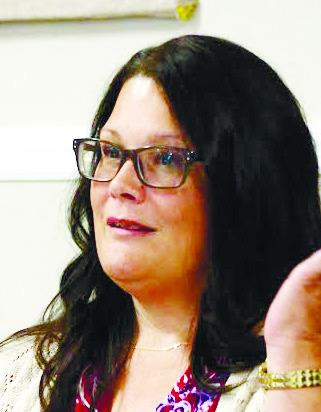
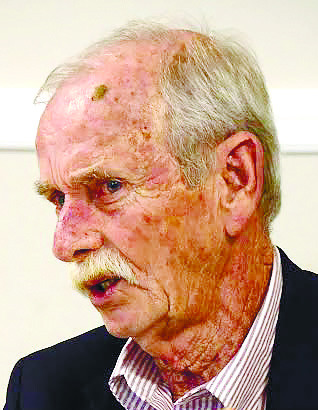
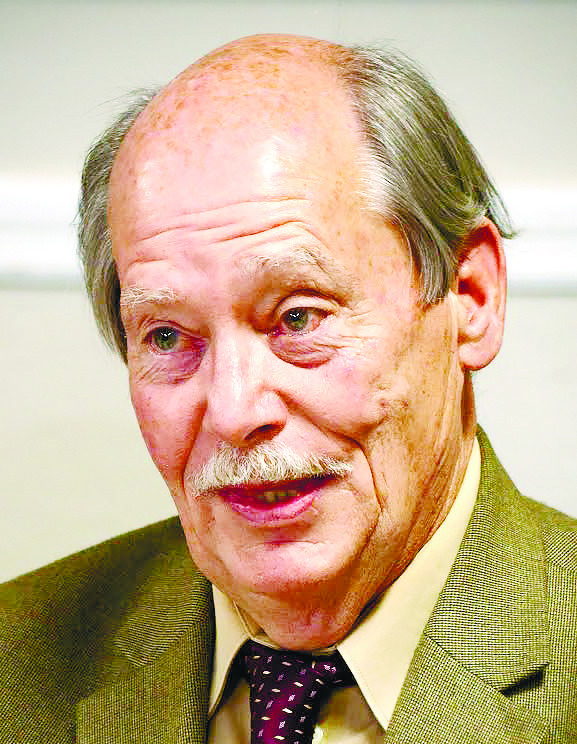
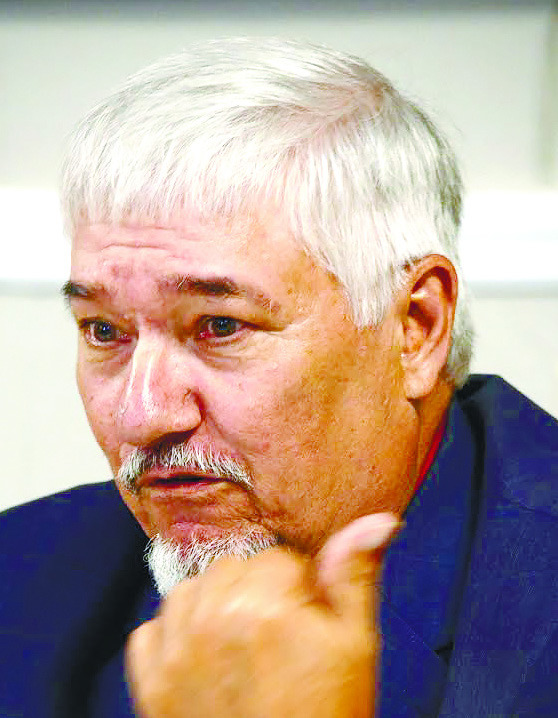
All four candidates vying for the Putnam County District 3 Commissioner seat vacated recently by previous commissioner Alan Foster were in attendance: Shona Bales, Charles Gray, Steve Hersey, and William Vargo.
Moderated by past council candidate Charles Trumbo, who was aided by former county commission chairman Billy Webster, each candidate took two-minute turns answering questions submitted by audience members. Approximately 45 residents filled the seats and their questions took nearly two hours to address.
The opening question was about the impact of rising property taxes due to recently increased property assessments for Putnam County residents.
Also addressed was the need for transparency in governing, the “proper role” of government, how the county’s budgeting process could be improved, the future of the county’s convenience centers versus mandated trash pick-up, ongoing water supply issues, road, and other infrastructure conditions, and how to attract more industry, businesses and other services to Putnam County.
But understandably, the short-term rentals (STRs) issue came up repeatedly, often as a peripheral item to other questions asked.
A simple yes or no question resulted in Bales answering “Yes,” Hersey responding with an emphatic “No,” Vargo “Yes,” and Gray weighing in with a Yes,” though he added it was “not a fair question,” upon being asked if they favored STRs in the district.
Hersey, a former Putnam County Board of Education chairman, as well as past county commission chair, was adamant, saying he would try to get them eliminated, but stressing he’s particularly opposed to any expansion of STR presence as the most recent ordinance condones up to 350 licensed locations.
He went on to decry language in the ordinance that he claimed takes a current non-conforming use, specifically in R1R, and makes it a conforming use by giving the responsibility of approving the change to unelected staff members.
“That whole thing needs to be stricken,” Hersey declared. “And if I’m elected, the first action I will take on that county commission is to bring a motion to rescind Section 3 of that ordinance. We cannot have the county commission hiding behind unelected staff in doing something which is a disservice to the residents of Putnam County.”
Gray, a former major project construction manager, and multiple HOA committee member, essentially agreed, though not so adamantly about eliminating STRs altogether.
“I’m opposed to pushing the over-commercializing of our lakefront properties and dumping all of this into District 3 and District 4. I do not support any more STRs in our county,” Gray stated, suggesting enforcement, rezoning, and licensing should be vigorously applied to maintain control. He suggested maintaining a database to track license issues and any complaints.
“These licenses have to be renewed every year. If that becomes a problem property, any of these STRs become a problem property, the county cannot reissue their license, and then we can deal with what happens,” he said.
Bales, who works as a loan officer at Farmers & Merchants Bank, is a Pilot Club member and has served on the Putnam County Board of Tax Assessors, said she was not personally aware of problems with STRs, but expressed confidence in the abilities of Putnam County Sheriff Howard Sills and his deputies to handle any enforcement issues that may crop up.
On the other hand, Vargo, a former trucking company owner and grain farmer who moved to Putnam County from Ohio several years ago, suggested the number of STRs in Putnam County could be increased.
“The 350 number; I guess if we had 10 of ‘em that were causing problems, that’d be 10 too many,” he said. “But the way I see it and the way I’ve read the draft and the way I understand it, and the way I see it working already, if it works as designed, I think we could have 500 STRs here if there were no issues. If the enforcement was intact there should be no problem … in some cases, some of these people coming into the STR are probably better than some of the neighbors we now have that are permanent, that have parties every weekend that we can’t do anything about.”