
MORGAN COUNTY
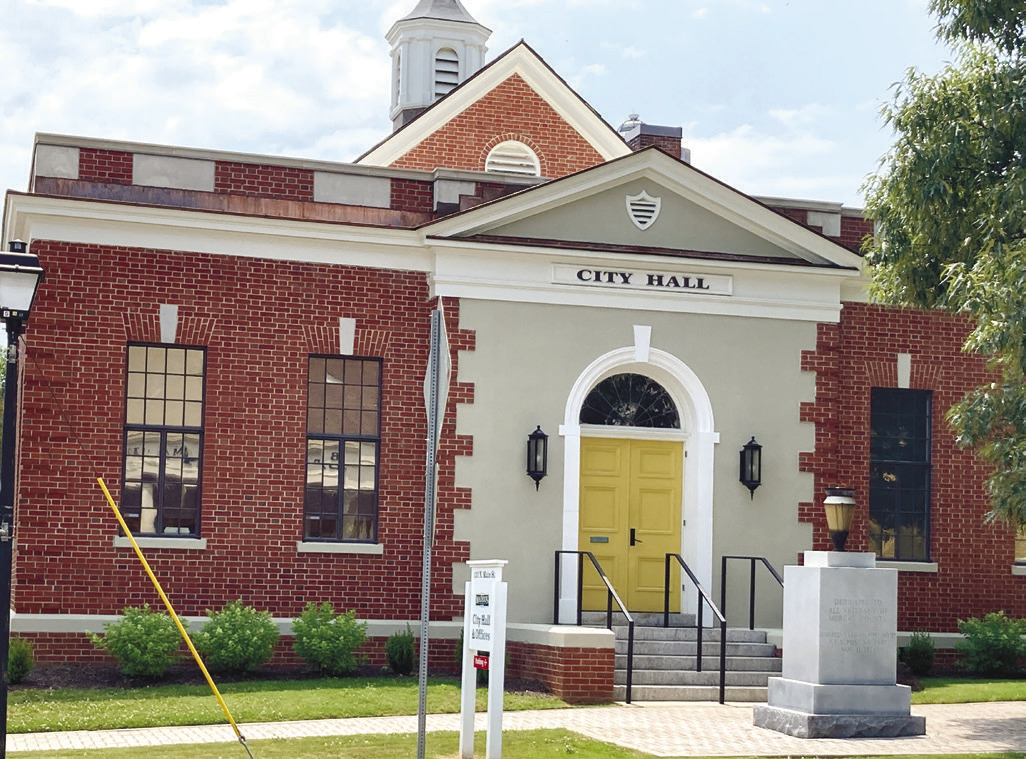
The Madison City Council began its month-long process of hammering out a budget for the upcoming year on May 26, and the new Madison City Manager John Klimm is adamant the city needs to reign in some of its spending and closely examine money it does spend.
Klimm was flanked by Finance Officer Karen Stapp and Justin Mullis, an intern from the University of Georgia who has been assisting with the budget process, who he praised for their help with this year’s financial roadmap for the upcoming fiscal year which begins on July 1.
More discussion of the upcoming budget will take place at the June 12 regular meeting which begins at 5:30 p.m. Two more budget hearings will be held with the first on June 21 and final approval of the budget scheduled for June 28.
Klimm said projected general fund expenditures of $5.6 million, a substantial decrease from the previous year, and a total budget of $22.9 million.
Klimm said the goal of the new budget is to solidify and strengthen the city’s finances.
“Our primary responsibility to the citizens of Madison is a fiduciary responsibility,” Kilmm said. “The annual budget allocates resources for a variety of city priorities and programs to ensure the community’s physical security, enhancement of the community’s quality of life, and maintenance and development of the city’s facilities. This policy document represents our commitment to prudent fiscal management to effective service delivery and to support an affordable quality of life for our citizens.”
Klimm said proven measures such as government consolidation, service regionalization, improved property management, and privatization would allow the city to tighten its belt and become more efficient.
Klimm also said Madison’s budget format is decades old and urged a move to a performance-based budget.
“Citizens increasingly want to know where their hard-earned dollars will be spent, but they also want to know why,” Klimm said.
Klimm added the City of Madison needs to maximize the allocation of funds to programs that work and away from those that do not.
He also said he favors a comprehensive community survey to be conducted over the next year to hear the community as the council sets spending priorities for coming years.
“We start this process with a commitment not to use general fund balance to balance the budget,” Klimm said. “General funds should only be used sparingly for true emergencies.”
Klimm said that if the city seeks to borrow money for capital projects in the future, bound councilors will review the city’s spending history to ascertain if the city has the necessary discipline and restraint in its spending.
“Spending our savings is a practice that needs to stop,” Klimm said rather firmly. “We can only spend what we have coming in.”
Klimm said each city department manager was asked to submit not only a proposed spending plan but also to articulate what was accomplished in the past year and what the department’s goals are for the spending level requested.
“The assumption contained within incremental budgeting is its fundamental flaw,” Klimm said. “Funding requests simply based on last year’s funding levels are not based on performance goals. Citizens need to believe the sacred judiciary trust they have given to us is, in fact, sacred.”
Klimm also announced that Madison will start next year with an organizational structure change creating six distinct departments: Police, Fire, Public Works, Finance, Planning and Development, and Human Resources.
Klimm said he would not advocate a property tax increase as a solution.
“We’re going to do what our citizens do regularly when they face financial challenges at home,” Klimm said. “They tighten their belts; they economize; they make choices and set priorities. They go without. Shouldn’t we do the same?”
Klimm said a recently conducted study recommended water rate increases to promote conservation and to build funding for infrastructure capital improvement that will be needed in the future. Those adjustments are expected to come over the next five years.
Klimm also spoke to the issue of employee compensation.
“What we’ve found is that compensation for numerous positions in Madison has not remained competitive,” Klimm said.
The new city manager also advocates reinstating residential and limited commercial glass recycling and a new communication system that improves the way the city reaches out to citizens in an emergency as well as a new fire station.
Downtown parking challenges and traffic are also on Klimm’s radar.
“We need to fight for a new and needed Madison bypass to get those trucks not servicing businesses downtown out of downtown once and for all,” Klimm said.
Councilman Eric Joyce expressed enthusiasm for Klimm’s approach.
“It’s really exciting and it’s really different from what we’ve done in the past,” Joyce said. “And I think this is great. I want to commend John and his staff for really digging in deep and giving us a chance to weigh in so early. It’s a much-improved process.”