
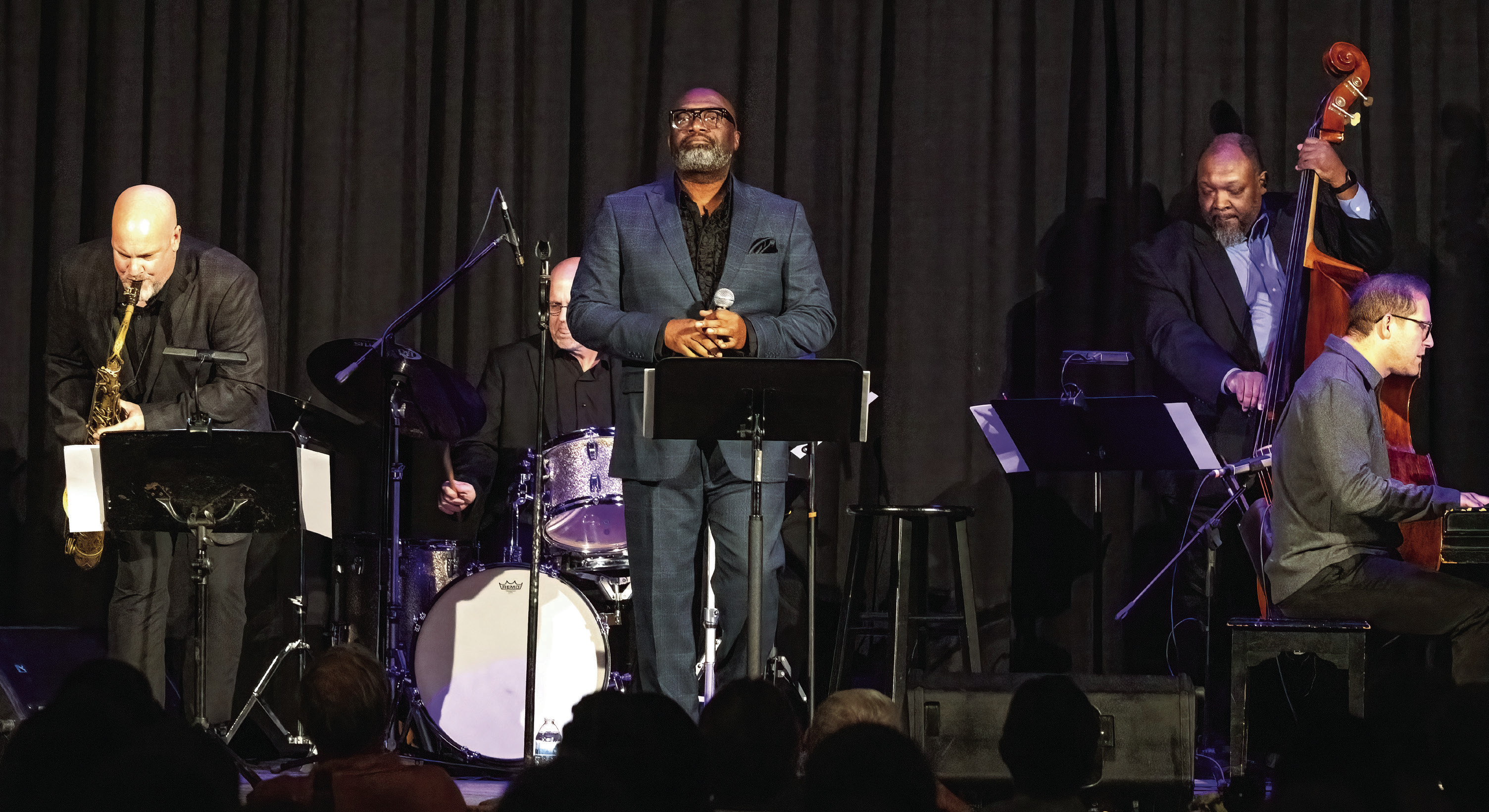
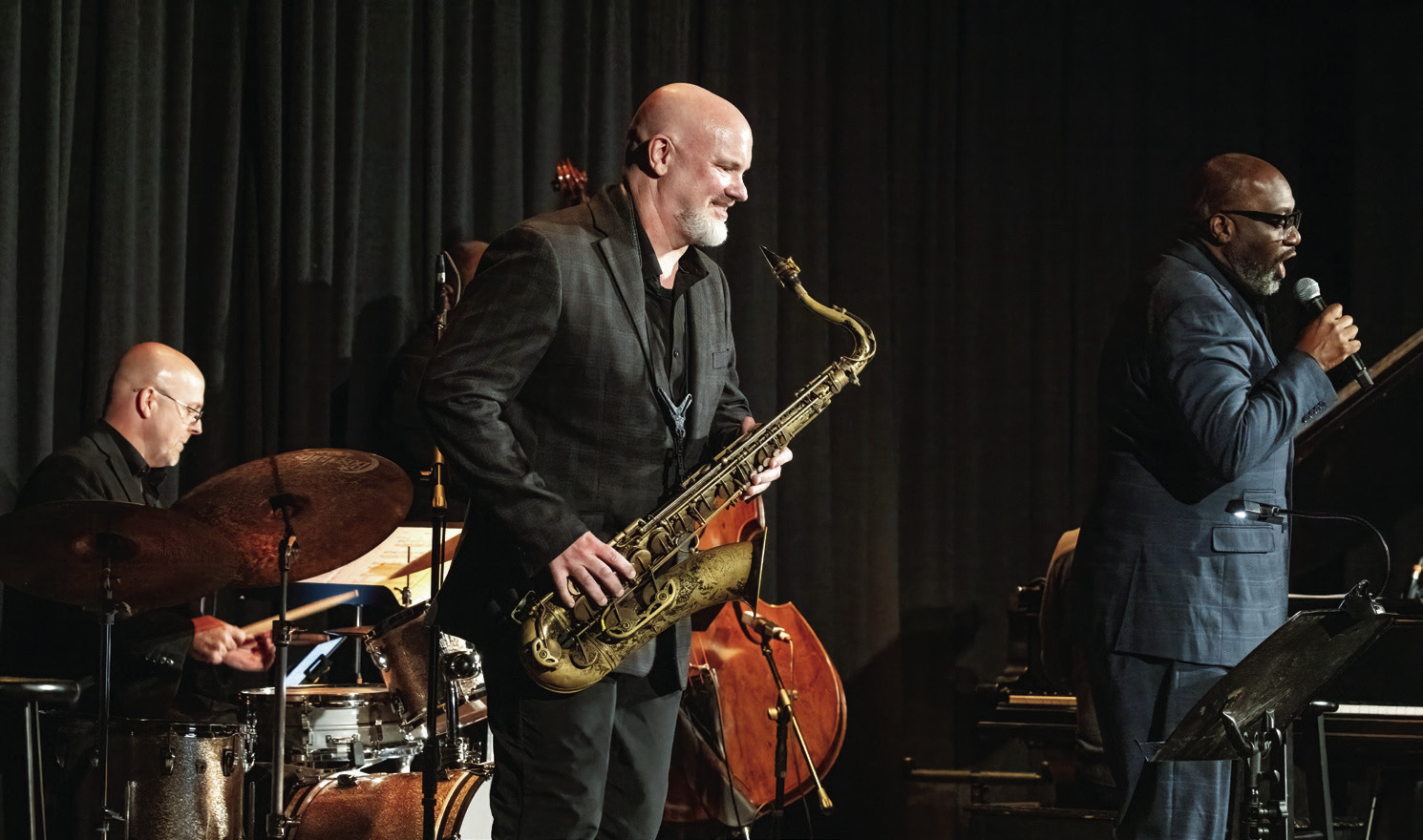
The Jazz Legacy Project brought to life the music of the legendary Ray Charles on Aug. 14 at Festival Hall.
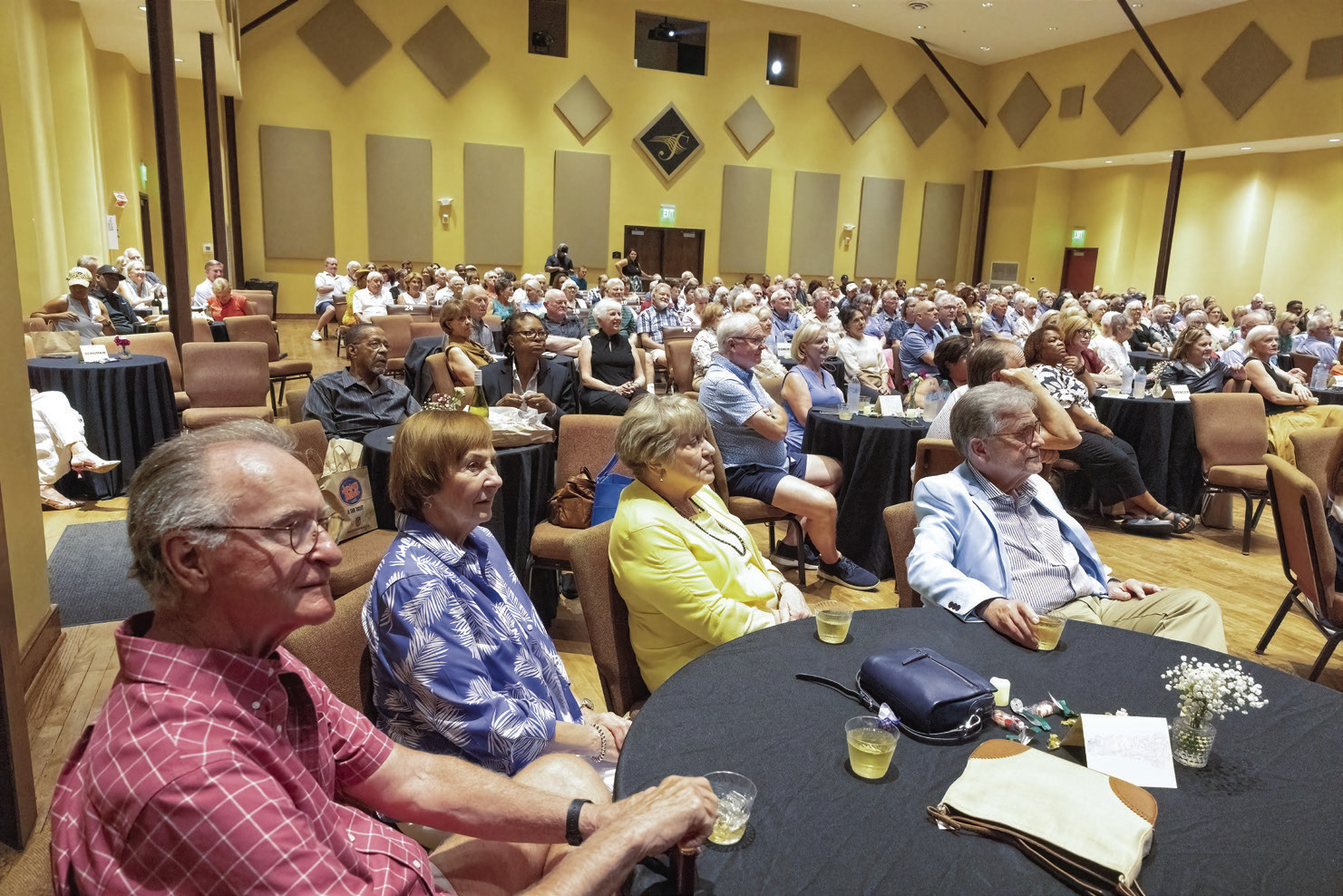
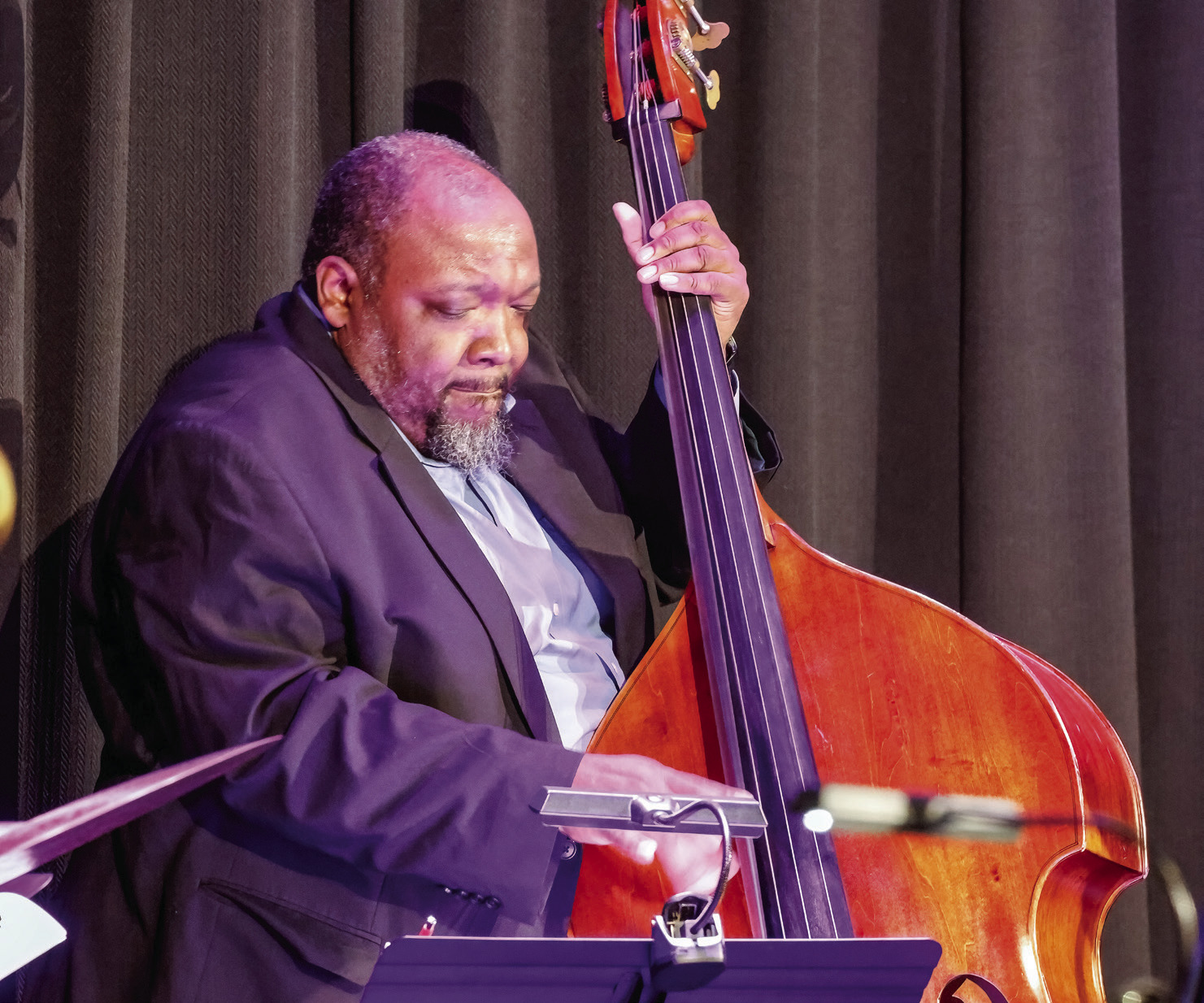
Vocalist Cleveland P. Jones joined the musicians who make up the Jazz Legacy Project – drummer and narrator Justin Varnes, saxophonist John Sandfort, bassist Kenneth Smith, and pianist Nic Rosen. Together, The Jazz Legacy Project entertained the sold-out crowd for 90 minutes.
Born in Albany on Sept. 23, 1930, Ray Charles Robinson was an American singer, composer, pianist, saxophonist, and band leader and is regarded as one of the most influential and iconic musicians in history. He was often referred to as “The Genius” by contemporaries.
As a pioneer in soul music in the 1950s, he combined sounds from gospel, pop, jazz, and rhythm and blues into his music and, in the 1960s, crossed over into country music while with ABC Records. Charles was the first black musician to be given total artistic control by a major record company.
Charles was playing the piano by age 5, and due to glaucoma, he went blind at 7 years old. Raised in Greenville, Florida, he went to school at the St. Augustine School for the Deaf and Blind from 193745, studied composition, wrote music in Braille, and learned to play the alto saxophone, trumpet, organ, and clarinet. He dropped his surname in order not to be confused with boxer Sugar Ray Robinson.
Ray Charles, during his long career, received Kennedy Center honors and the National Medal of Arts, and the Polar Music Prize. He was inducted into the Rock and Roll Hall of Fame in 1986, won 17 Grammy awards, the Grammy Lifetime Achievement Award, and in 2022 was inducted into the Country Music Hall of Fame and the Black Music & Entertainment Walk of Fame. Ten of his recordings have been inducted into the Grammy Hall of Fame.
Some of his most famous songs include “Georgia on My Mind,” “Hit the Road Jack,” “America the Beautiful,” “I Can’t Stop Loving You,” and “Seven Spanish Angels.”
Charles is considered to have been one of the most important artists of the 20th Century. He once said, “I never wanted to be famous; I just wanted to be great”.
The Robinson Foundation for Hearing Disorders, was founded by Ray Charles in 1986 and was later changed to The Ray Charles Foundation, dedicated to providing support to those with hearing disorders and helping youngsters with educational programs.
Charles once said, “The inability to hear is a handicap, not the inability to see,” and the vision of The Ray Charles Foundation is to instill in young Americans the idea that “there is no challenge too great one cannot overcome.”