

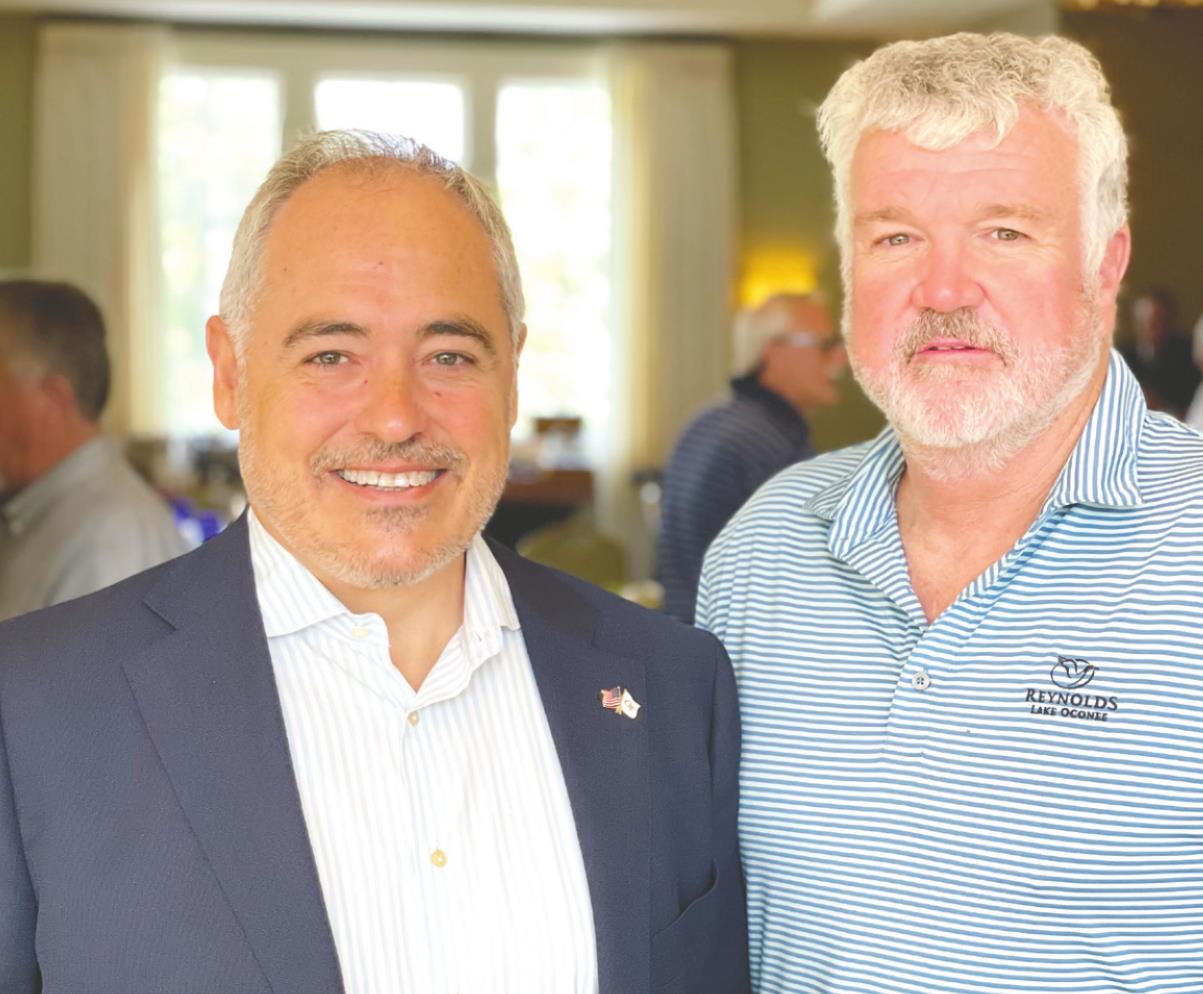
Bob Harris – a 1973 graduate of Georgia Tech with an industrial engineering degree and a rewarding career with an Emerson division – is on a mission to find and solicit a growing number of GT alumni here in Greene County.
He is so committed to his cause that he wears GT t-shirts and polos wherever he goes, hoping those he meets will acknowledge that they, too, are indeed GT graduates. That is a difficult proposition here where red and black and Bulldogs reign just 48 miles away at the University of Georgia, a rival school.
One of America’s leading research universities, Georgia Tech serves 44,000 students in top-ranked graduate and undergraduate programs ranging from engineering and science to business, computing, design and liberal arts. It receives more than $1.2 billion in research grants every year.
The Greene County area was always considered a smaller area and larger groups were formed such as those in Fulton.
“I knew there would be people in the area that would be Tech fans,” he said. “As the database was updated and we discovered graduates here, our alumni group has grown. We are excited about that.”
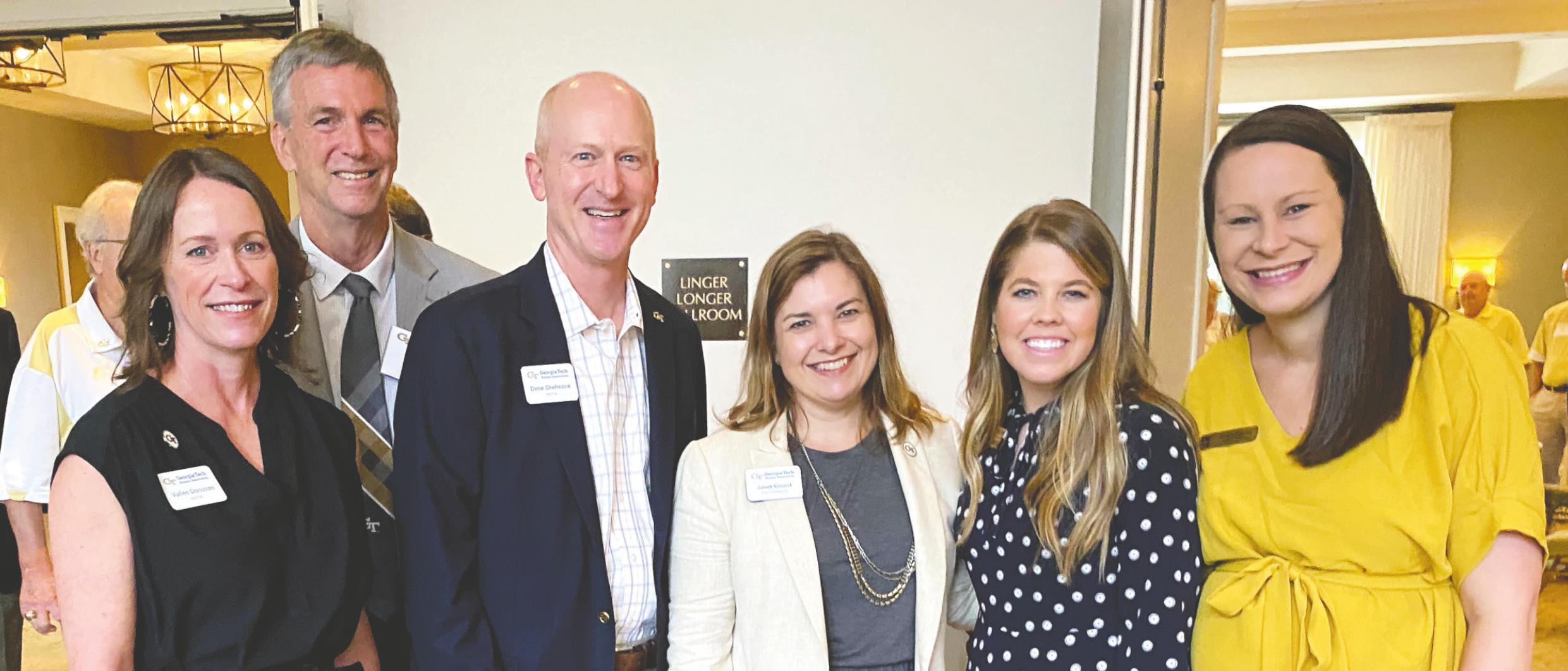
At a special alumnus meeting at the Ritz Carlton this week, more than 50 newly identified area alumni gathered to meet fellow graduates and hear Georgia Tech President Angel Cabrera speak. Having just returned from Europe, Cabrera addressed the attendees about the many exciting programs underway with Tech graduates abroad, namely the design of a new toilet that would address sanitation concerns in areas with subpar sewer systems.
Another is a satellite design meant to find water on the moon which will deploy on the next space mission.
“There is amazing work going on with our graduates,” he said. “We are the No. 1 research college in the country.”
Cabrera was joined by the Georgia Board of Regents President Harold Reynolds at the event to highlight the introduction of a development program designed to attract talent to power discoveries of new technological and scientific innovations. “Transforming Tomorrow: The Campaign for Georgia Tech” is grounded in the institute’s strategic plan to bring advancements which ultimately shape the future.
“Simply, our mission is to best develop Tech to guide the human condition,” Cabrera said. “We have always looked for ways to transform. We have a commitment to progress and service and a belief in the power of technology, science, and committed leadership in making things better.”
The campaign is looking to infuse the institution with significant philanthropic funding over five years. Beyond attracting talent, GT will use the funding for innovation and entrepreneurship, and adapting the campus for the technological needs of the 21st century. It will also help with scholarship funding, enrichment programs, increasing graduate and fellowship research programs and other initiatives aimed at supporting minorities.
Cabrera joins the new mayor of Atlanta, Andre Dickens, and the president of Georgia State, Brian Blake, as strong Atlanta leaders, all having graduated from Tech, currently the second-largest educational intuition in the state, just behind UGA.
Currently more than 16,000 students are enrolled in online masters programs. This year saw 50,000 prospective students apply to GT with only 30,000 accepted. It is considered one of the premier technological research institutions in the United States.