
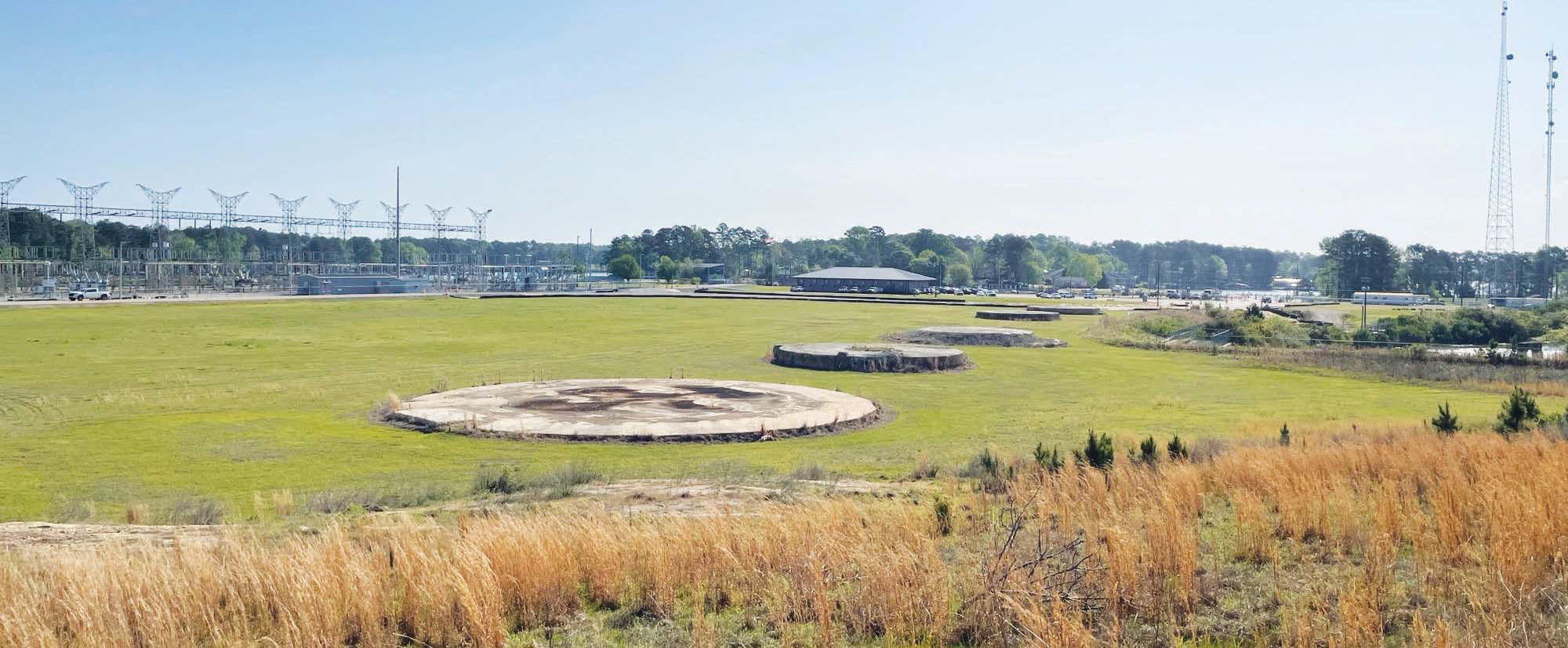
The U.S. Environmental Protection Agency (EPA) is considering a new permitting approach that could affect coal ash cleanup projects nationwide, including ongoing closure and recycling efforts at Georgia Power’s retired Plant Branch in southern Putnam County.
In an Advance Notice of Proposed Rulemaking published July 14, the EPA is seeking public comment on whether it should create a temporary general permit program for disposal sites containing coal combustion residuals (CCR), commonly known as coal ash. The agency said the notice does not change any existing regulations or impose new requirements but is intended to gather public input before deciding whether to propose a formal rule.
Still, the proposal almost immediately drew criticism from environmental advocates.
Washington-based Earthjustice claimed the Trump administration is “putting the coal power industry’s interests before what’s best for the public.
“This would allow known polluters to decide that their pollution is okay,” Gavin Kearney, deputy managing attorney of Earthjustice’s Clean Energy Program, claimed in a prepared statement. “It is an outrageous scheme that would threaten our sources of drinking water and the environment.”
Coal ash is the byproduct left after coal is burned to generate electricity. Federal regulations adopted in 2015 established standards to govern its disposal, including groundwater monitoring, corrective actions, recordkeeping, closure of disposal units, and long-term, post-closure care. Those rules are also self-implementing, meaning utilities are primarily responsible for complying without obtaining federal permits.
This latest notice focuses on a narrower issue. Earlier this year, the EPA proposed allowing permitting agencies to consider site-specific conditions when approving groundwater monitoring, cleanup plans, and closure schedules for coal ash facilities.
Because some states may take years to incorporate those changes into their own regulations, the EPA said it is exploring whether temporary general permits could bridge that gap until individual permits become available.
Under the proposal, qualifying facilities could receive temporary permit coverage while awaiting approval of an individual federal permit or a permit issued under an EPA-approved state program. The agency said these permits could prevent delays in ongoing closure and remediation projects while maintaining regulatory oversight.
Meanwhile, Georgia Power continues extensive coal ash closure work at Plant Branch.
The massive coal-fired generating station began operating in 1965, stopped producing electricity in 2015, and was fully decommissioned four years later. Over its lifetime, the plant used five so-called ash “ponds” to store coal combustion residuals, despite little water now remaining within each pit.
According to Georgia Power, Ash Pond A has been cleaned out, while Ash Ponds B, C, D, and E will be closed by excavating the ash and relocating it to a lined, state-permitted landfill on the Plant Branch property.
Plant Branch also houses one of Georgia Power’s largest coal ash recycling projects. In partnership with Eco Material Technologies, the company has built a processing facility to convert excavated coal ash into a strengthening material for mixing into concrete. The facility, expected to be operational by the end of this year, is expected to process about 600,000 tons of coal ash annually, with most of it to be trucked into Putnam County from also retired Plant Arkwright, near Macon.
The truck transfer is expected to begin early next year and should continue for about six years. While environmental organizations have criticized aspects of federal coal ash policy, many support recycling coal ash into concrete since it removes a potentially dangerous byproduct from the storage ponds to encapsulate it within finished construction products.
EPA officials said the current notice represents just an early step in the rulemaking process.
Upon reviewing public comments, the agency said it will decide whether to propose regulations establishing temporary general permits for certain coal ash facilities, a process that undoubtedly will include further opportunities for public review and comment.