
GREENE COUNTY
Many of us know the impacts of severe weather and the destruction along “Tornado Alley” in America’s heartland. News images capture pictures of communities being wiped out and homes suffering damage due to both violent storms and resulting tornadoes.
Georgia, however, exists in its own “Dixie Alley,” and the state has amassed damages throughout the last decade amounting to millions of dollars and requiring federal assistance to those affected.
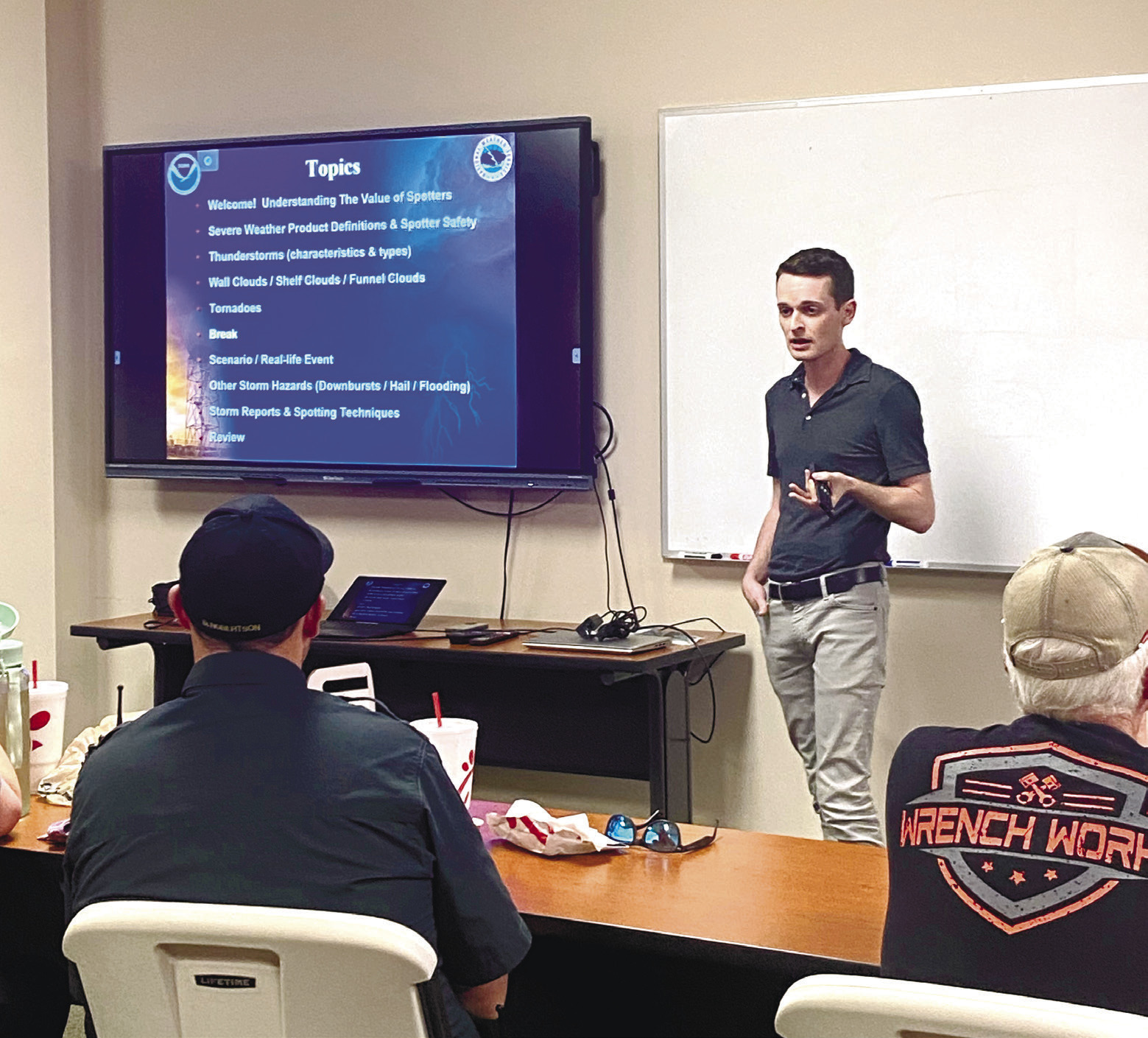
Greene County recently sponsored and opened its own weather preparedness overview that seeks to both educate the public and ensure county response measures are routinely monitored and adequate to meet the needs of any weather emergency that strikes the county. Held in conjunction with the National Weather Service (NWS) in Atlanta, the overview is an annual training to establish and ensure ways to provide protection and safety for the citizens of Greene County through comprehensive training and education.
Joe Bashore is the county’s Public Safety Director, Emergency Management Agency Director, and county representative with the Georgia Emergency Management (GEMA) and the NWS. Among these duties, Bashore also oversees the county’s emergency medical services (EMS), the 911 call center, animal rescue and fire and rescue.
“This is an annual training that we open to several neighboring counties and their first responders,” Bashore said. “The training is intended to help and educate recognition of potential weather hazards and keeps the county compliant with its accreditation through the NWS.”
Byron Lombard, Greene County manager, commented that the training complements the weather preparedness already above par in the county.
“In my career, I personally have been through five to six of these overviews,” he said. “It is certainly a measure of our preparedness for storms the county would experience. It is another example of the county’s commitment to public safety.”
Upon completion of the class, those who attend are provided with important contact information to access the NWS which helps provide information using several methods, including radar spotting, bulletins and other safety alerts.
The seminar overview also provides knowledge in appropriate pre-warnings that advise the intensity and direction of storms. Additionally, it gives the county storm research for future knowledge to be utilized by staff meteorologists in forecasting and tracking storms.
According to presenter Ryan Willis, a meteorologist from Atlanta’s NWS, counties can better provide land surveillance of any funnel clouds, hail, suspected tornadoes, strong winds and heavy rainfall, all of which contribute to significant weather events. NWS reported that the state averages roughly 30 to 35 monthly tornadoes each year. Earlier this year, the area saw a big tornado event that just missed Greene County. March through May typically sees the most activity, but fall and summer do experience events, too.
The NWS classifies tornadoes by their wind speed and the amount of damage they cause using a scale called the “Enhanced Fujita” scale. Abbreviated by EF, an EF0 to an EF1 tornado can experience winds and speeds upwards of 65 to 110 mph. The highest on the scale is an EF5, considered violent and having wind speeds upwards of 200 mph.
In 2008, Atlanta experienced a significant tornado outbreak that spawned deadly storms throughout much of the southeastern United States.
The most infamous tornado occurred March 14-15, when an EF2 Tornado caused widespread damage across downtown Atlanta, including the CNN center, the Georgia Dome, the Georgia World Congress Center, Centennial Olympic Park and the Westin Peachtree Plaza Hotel. The majority of tornadoes occurring in Georgia are EF0 to EF1.