
A lengthy, occasionally contentious discussion over the Putnam Development Authority (PDA) concluded the Putnam County Board of Commissioners meeting on Friday.
It ultimately led to a failed vote on a resolution formally opposing tax exemptions and payments in lieu of taxes connected to a proposed residential project by Harmony Road, Georgia LLC.
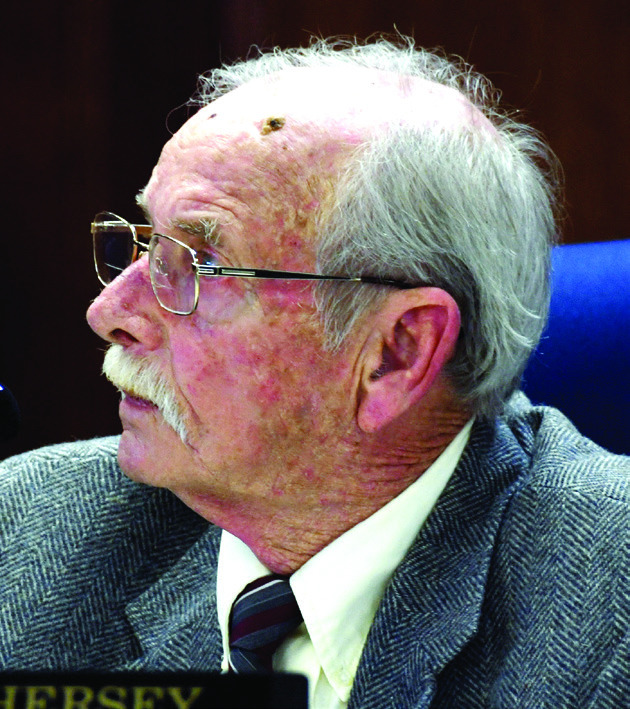
The commission was considering a resolution introduced by District 3 Commissioner Steve Hersey opposing any tax exemption or payments in lieu of taxes (PILOTs) tied to the Harmony Road project, which involves a proposed $100 million revenue bond issuance through the PDA.
Reading directly from the resolution, Chairman Bill Sharp summarized it as, “the Board of Commissioners of Putnam County opposes a tax exemption for Harmony Road, Georgia, LLC and does not grant its consent to any payment in lieu of taxes.”
Hersey argued the resolution was necessary to make the board’s position absolutely clear, especially following bond validation proceedings in Superior Court.
“In both instances this was rejected,” Hersey said, referring to earlier votes against similar agreements. “What this resolution really says is, are we going to give our consent or are we going to withhold our consent?”
Hersey cited state law to support his position. Quoting OCGA 36-80-16.1, he said, “In order to give consent to payments in lieu of taxes, this board has to, by ordinance or resolution, give its consent … And this resolution says we will not give a consent to payments in lieu of taxes for this project.”
County Attorney Adam Nelson countered that the board does not directly grant tax abatements.
“Tax abatement is not a term that exists in Georgia’s statutes,” Nelson stated. “You can’t actually do that. The proposal … is that the development authority owns some interest in that property, and that ownership is what results in the tax-exempt status.”
Nelson also noted the complexity of the issue and said many of the questions raised by commissioners were already before the court.
“It’s already before Judge [Stephen] Bradley,” of the Ocmulgee Judicial Circuit, Nelson pointed out. “If it were required, I would suggest you’ve already taken the action of not consenting.”
While opposing the project, District 1 Commissioner Tom McElhenney expressed discomfort with voting on a resolution without a clear legal direction.
“I’m not comfortable authorizing [the chairman] to sign this until we have a clear understanding of what that actually means,” he said. “I don’t think that we need a resolution … we’ve already said it twice.”
District 2 Commissioner Richard Garrett voiced broader concerns about the process and lack of consensus.
“I don’t think it’s a good look for a PDA to proceed with a project without the consensus of the taxing authorities,” Garrett said.
While acknowledging potential benefits of the project, he added, “I don’t like the fact that we’ve got this division and that we’re seemingly forcing something through.”
Nelson appeared to favor letting Judge Bradley make the ultimate determination over how to proceed, pointing out the commission could simply wait on the judge’s ruling before taking a stance.
“If you choose not to decide, you have still made a choice,” Nelson said, quoting Canadian prog-rock superstars Rush. “And in this case, twice the body has not provided consent. So, whether or not you want to move forward on this item, I guess I would say that you certainly can.”
After nearly an hour of debate, Sharp called for the vote on the resolution authorizing him to sign a statement opposing tax exemptions and PILOTs.
The electronic vote recorded two against from Garrett and McElhenney, with only Hersey in favor.
“This motion fails,” Sharp declared.
Though the resolution did not pass, the discussion underscored ongoing tension between the commission, the PDA, and even community members over transparency, taxing authority, and the role of development incentives in Putnam County. The ultimate impact now apparently awaits Bradley’s pending decision on the bond validation.