
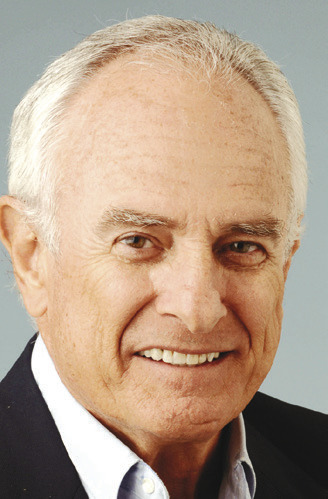
RABUN GAP — Last weekend, the Presbyterian Church here was overflowing with mourners who came to pay respects to Clyde J. (Sonny) Smart in a modest and simple service that reflected the essence of a man who spent his life underscoring leadership principles that made young people the beneficiaries of a philosophy that incorporated selflessness, altruism, goodwill, and fair play.
In this modest setting, which once was the playground of Cherokee Indian boys, Sonny Smart reminded us that unpretentiousness, simplicity, making do, and following the tenets of the golden rule are most likely to be achieved where humility prevails. This is that kind of place, and Sonny Smart was fit for its environment.
Coach Smart was not a complicated man. He gave of himself to the institutions which framed and perpetuated his life of 76 years. He was showing and caring and got the most incredible pleasure out of a well-struck golf ball, knocking down a pair of quail on a covey rise, and seeing a young athlete learn to excel at a game that teaches one to accentuate second effort and teamwork to realize the goal of winning championships.
Eulogizers, including his offspring — Karl, Kirby, and Kendall — spoke of his appreciation for family values, the emotional fulfillment he found in bringing to earth an agile dove with its clipped wingbeat, which enables it to dart—like Barry Sanders in the open field—to heighten the challenge for a hunter, the rush that comes with hitting an exploding quail that takes flight at the edge of the woods, and his coaching young athletes to excel.
As a coach, he paid close attention to details and fundamentals. He was also a good teacher and, most of all, a good listener.
He belonged to a fraternity of coaches who loved their work and found the greatest reward in seeing athletes succeed and experience growth and development by excelling in sports and then finding their way in life. When an overachiever made the team or, in a serendipitous moment, brought about a scholarship against the odds, that was the ultimate fulfillment for him.
Proud of all his children, he was a doting grandfather who identified with the “reading, writing and ‘rithmatic” platform of his forebears. The moral code was essential, and good grades were a coveted milestone. He had a wry smile and detached manner, never taking the lead in conversation but always responding insightfully.
Not far from the church is a modest house on the side of a mountain where he and his wife, Sharon, lived their final years together. There is a beautiful view of the valley below, which showcases meadows that sparkle in the early morning dew, along with fields and farms that keep Rabun County bustling with activity, from the daffodils of April to the turning of leaves in the fall. He agreed with the good living that came with being a resident of Rabun County, having escaped “life below the gnat line” as he approached his sundown years.
I have visited the Smarts on occasion over the years and have never left for home without them handing over a small bag of tomatoes and other garden staples. This not only reflects their good neighborly manner and their appreciation for nature, the land, down-home industriousness, and the emotional fulfillment that comes from a green thumb.
One of the highlights of the success of the Georgia football program, orchestrated by their middle child, Kirby, was visiting with Sonny before the game and the two of them afterward when Sharon came down from her box seat upstairs to join him for a victory celebration.
We always met briefly before the game at the Georgia bench, both hopeful for success but cautiously optimistic. He knew the game's nuances kept it from being as simple as the critics had claimed.
One hot September afternoon early in Kirby’s tenure, I asked Sonny why he would leave the air-conditioned comfort with refreshments at hand and endure the heat of the sidelines, he replied: “Well, everybody up there seems to think they know more football than I do, so I come down here so I can enjoy myself without having to listen to all that.”
A passionate golfer, Sonny was an aficionado of Donald Ross-designed golf courses. After Kirby got a healthy raise one year, I told him that he ought to get his world-class coach/son to take him to Dornoch, Scotland, the birthplace of the famous Scottish course designer, and play the course that influenced Ross’ design philosophy. He smiled, but I knew he would never make that ask.
That is one of the many things I appreciate about the senior Smart. He never doted on Kirby publicly. He did no interviews, he never proffered any quotes, and he avoided all cameras.
We were within arm’s length of each other when Kelee Ringo intercepted Bryce Young for the game-clinching score that brought Kirby his first national championship in Indianapolis. We embraced briefly, and then I sprinted down the field to the end zone celebration. I can only imagine what went through his mind. To have a son coach his team to the national championship had to be one of the most fulfilling moments of his life, but he never injected himself into the mix in any way.
They had private talks about Kirby's historical journey. The son, especially early on in his career, sought advice from his father. Nick Saban is known for being difficult to work for, but Sonny always told Kirby that he benefited from a great learning experience. Kirby always knew that Sonny was right.
Following retirement, Sonny started the “Georgia Mountain Senior Golf (GAMSGolf) Association, which he ran successfully for years. He gave it his entire attention, which kept him active. In the process, it helped make countless seniors in North Georgia active.
There were tears at the service, but also laughter. Kirby told a story related to Sonny’s interview for a job in Bainbridge. After the interview, he agreed to take the job. He had hardly returned home to Slapout, Ala., when he got a better offer from another school.
Sonny went to his father (Kirby’s grandfather) and told him of his dilemma, eliciting this response: “Didn’t you tell those folks in Bainbridge you were going to take that job?” When Sonny replied, “Yes,” Sonny’s father said, “Son, I don’t think you have a decision to make.”
Such integrity is a hallmark of the Smart family.