
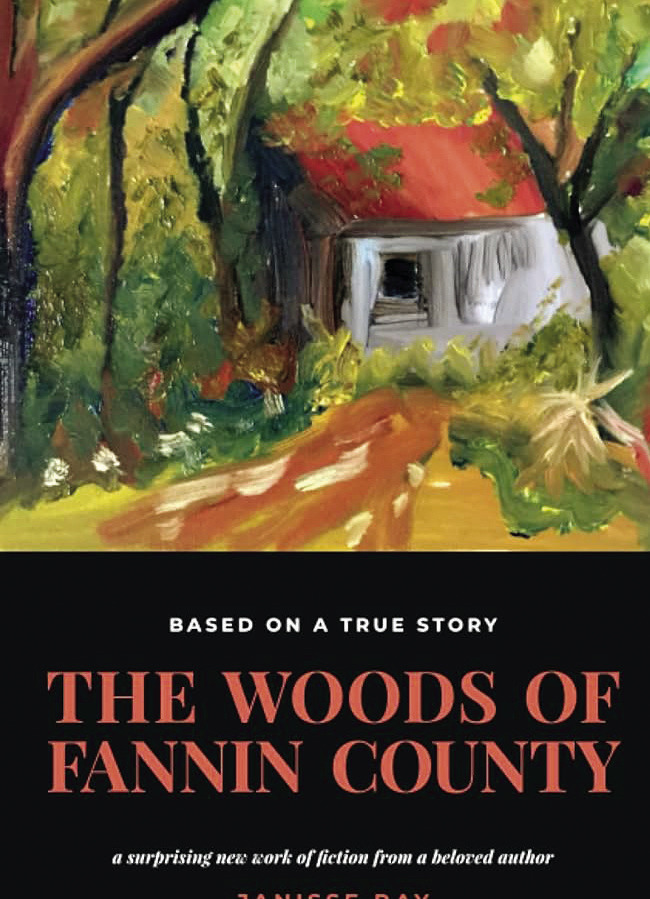
A child’s greatest fear may be abandonment or becoming lost. What will I eat or drink? What is hidden in the world that can hurt me? How can I stay warm when the cold comes? Those questions are at the heart of Janisse Ray’s The Woods of Fannin County, and the book is terrifying, yet filled with love and consolation.
Based on a true story, Ray’s astonishing novel tells the story of eight Georgia children, aged three months to 10 years, who their parents abandoned in a rural shack in the foothills of the Blue Ridge Mountains. Ray first heard the story from her father, who learned it from one of the survivors. All of the children made it out alive after several years and grew into productive adults.
Ray, best known for her award-winning memoir, Ecology of a Cracker Childhood, later began a 10-year journey, interviewing members of the abandoned family before finally deciding their story could only be adequately told through the lens of fiction.
The Woods of Fannin County is her first novel, which rings with truth, suffering, and sorrow. Rather than have all the grown children tell their experiences, she creates a fictional character who appears as one of the brothers from time to time, to keep the story moving.
And what a story it is. The children lived alone for four years, with only occasional visits from their mother. They scoured the hills and woods for anything to eat. They tried to find anyone to help take care of them. And in the end, they survived through courage and strength.
Once grown up, however, they rarely spoke of the experience to each other, and to others seldom.
Unsurprisingly, they finally told their story to Ray, one of Georgia’s finest writers and a member of the Georgia Writers Hall of Fame. And her decision to turn it into a novel gives us a broader lens through which to see and hear what could have been an enduring tragedy.
Instead, the Woods family, as the book’s dust jacket says, “wove a sometimes painful, sometimes jubilant, and always astounding revelation of their abandonment and survival in the Appalachian wilderness.”
But in so many ways, their survival always remained on the edge of disaster. Their ultimate rescue reminds one of what Edward Abbey once wrote in his masterpiece, Desert Solitaire: A Season in the Wilderness: “A great thirst is a great joy when quenched in time.”
For a reader of The Woods of Fannin County, that great thirst is presented through strong craft and unforgettable empathy. And when the thirst is quenched, Ray has given us a story to cherish, something enduring, beautiful, and hopeful.