
PUTNAM COUNTY
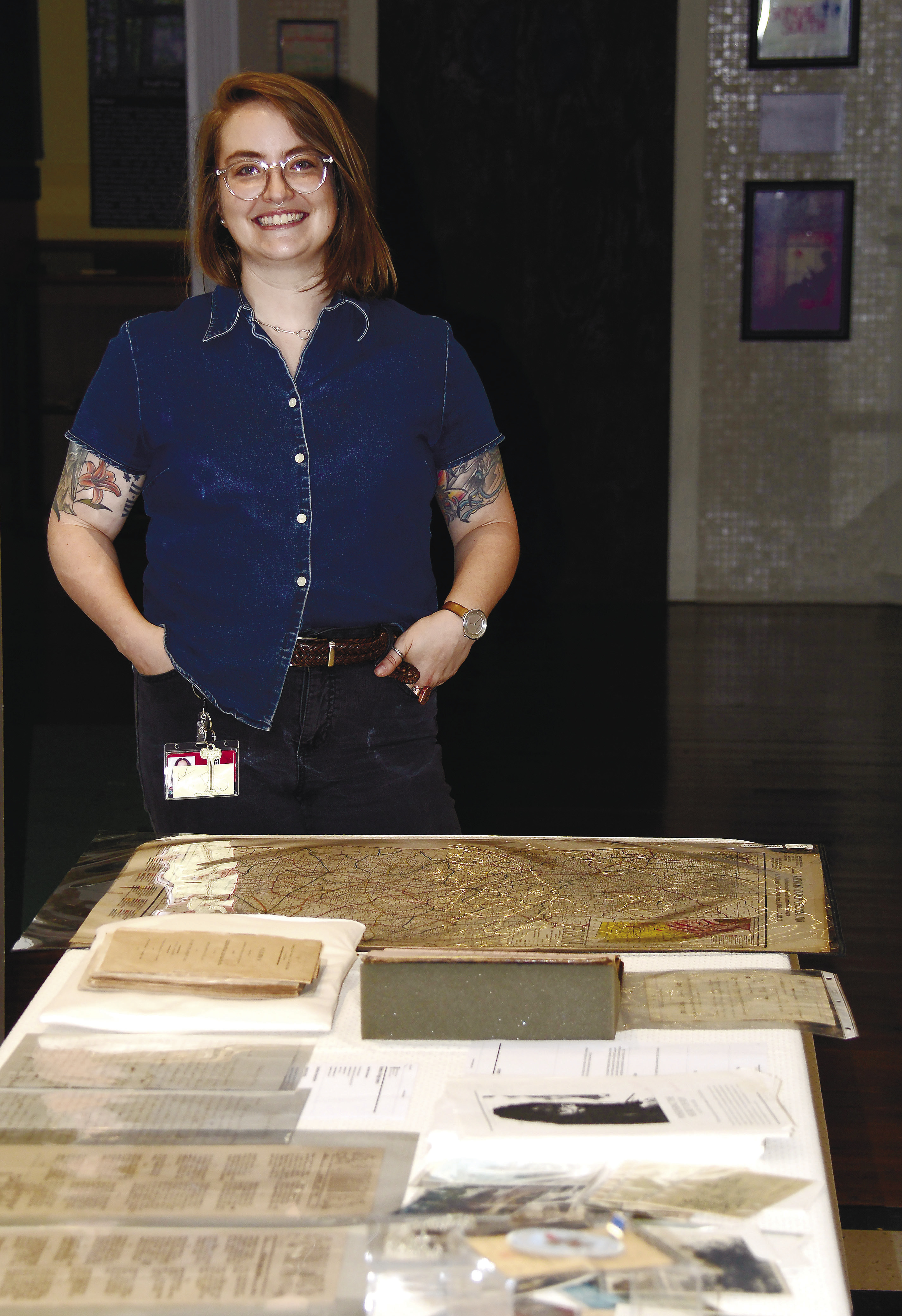
Sometimes seemingly mundane items can trigger connections – sometimes unexpected connections.
Such was the case last Friday when the University of Georgia’s Hargrett Rare Books and Manuscripts Library brought some of its collections to the Eatonton-Putnam County Library and next door at The Plaza and its Old School History Museum (OSHM).
The exhibits were part of an outreach tour of seven north Georgia libraries. The Eatonton visit was the only one to also featured a separate exhibit of Putnam-related maps, documents, and a variety of miscellaneous and sometimes unusual items.
These Putnam items included the likes of a typed copy of Putnam County’s 1850 census, a bound 1896 copy of Eatonton’s city ordinances, the 1826 “daybook” at Rees’ general store in downtown Eatonton, Michael Dennis’ account book during the Civil War and Reconstruction, a 1916 map of Georgia railroads featuring a maze of main lines and short lines in the heyday of railroading, and Renza Paschal’s World War II dog tags.
One exhibit that drew considerable attention was four copies of the Putnamite, a one-page, single-sided, mimeographed publication that few, if any, visitors had ever heard of before. The four copies were dated during the summer months of 1944, and could only be described as half-news, half-gossip, but filled with names and the doin’s of the boys away in the service.
One exception to the Putnamite’s generally upbeat tone came in a terse single sentence in the July 23, 1944, issue: “George and Florence Scheer have received word from the War Department this week that Private Frederick Scheer has been taken prisoner since July 17.”
The Scheers were Jewish and ran the Rosa Jarmolusky dry goods store. George wrote a column for The Messenger. Thankfully, Frederick Scheer survived a German POW camp and returned to live in Atlanta, where he wrote a book about his captivity.
Otherwise, the issue had items like Paschal’s name and APO address on a list of local servicemen asking people back home to write a letter, alongside announcements of the local (women’s) “Rifle Corps celebrating its second birthday with a barbecue at Davis Lake last week.”
Visitor reactions to the two tables of items varied. Carole (Spivey) Thomas was thumbing through a photo book when she nudged her daughter, smiled, and pointed to a mid-20th century photo of a Tom Thumb wedding at the Phoenix School. “That’s me,” she said.
More on the unexpected side was Bill Carman’s response to a question about what stuck out to him.
“The railroad map,” he said. “Were you a railroad man?” “No, but my grandfather was. He was the head brakeman for the N.C. and Saint L. (Nashville, Chattanooga, and Saint Louis) . . . for the whole system, from Atlanta to Saint Louis. He invented the air brake. Well, George Westinghouse invented it, but my grandfather rode underneath a car with Westinghouse to test and observe (the air brake).”
Six-year-old Sutton Van Dusen was asked the same question. “I really liked the necklaces,” she responded immediately, pointing to Paschal’s dog tags.
As mentioned, unexpected connections.