
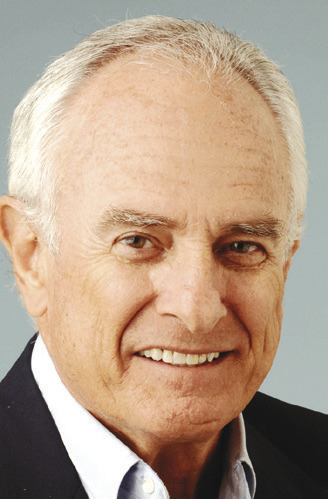
Earlier this month, a friend forwarded an internet recap of the day the Atlanta Braves signed Satchel Paige to a contract that enabled him to receive a Major League pension.
At the time, Paige needed 158 days to qualify for his pension. He contacted 29 Major League teams, but nobody responded because he was 62 years old.
Paige was something of a remarkable anomaly when he helped the Cleveland Indians win the 1948 American League pennant at age 42. Cleveland went on to defeat the Braves, who were still in Boston, in the World Series. Paige earned a World Series ring, received much-deserved respect, and was subsequently inducted into the Baseball Hall of Fame.
It would be the Braves, led by owner Bill Bartholomay, who signed a contract with Paige to enable him to enjoy retirement more fully.
“I jumped all over that,” Bartholomay said. “I didn’t think of it so much from the standpoint of diversity. I thought it was the right thing to do.”
Those who knew Paige’s story best say he was as good as he was colorful. Being a legendary character has always been part of his history, but he obviously possessed a stunning and rare ability to pitch a baseball.
In his prime, Paige once won both games of a doubleheader, starting one and taking over in long relief in the second. Despite a near-lifetime of pitching, he never experienced arm trouble.
In early 1980, I drove from Kansas City to St. Louis, where I had arranged to have lunch with Cardinals great Stan Musial. Joining us was well-known minor league owner A—Ray Smith, who owned the Springfield, Illinois, Redbirds.
Smith told me that Paige was a member of his staff. He had made Paige a vice president and wanted him to talk pitching with his young pitchers and sign autographs for fans.
The jovial owner extended an invitation for me to come spend some time with Paige. I immediately made arrangements to get to Springfield and spent a day and a half with him.
Fortunately, I recorded a long conversation with Paige about his life and career. He was charming and informative. It came through loud and clear that baseball was his life, and he enjoyed the game as much as any man who ever played it.
Paige said he often used matchbooks, cigarette packs and matchsticks as home plate when he practiced.
“That’s where I learned my control,” Paige said.
He spent most of the daylight hours at the ballpark. When he went into the clubhouse, the “betcha you can’t do this” games continued. One involved balancing a baseball on an empty Coca-Cola bottle. They bet Paige he couldn’t knock the baseball off the bottle by hitting only the ball. If he hit the bottle, he would lose the bet.
Paige also offered evidence that confirmed the Negro Leagues were every bit as legitimate as the Major Leagues.
When the Dodgers signed Jackie Robinson, Paige was both a friend and admirer of Robinson. But he noted that Jackie was not a regular when he first arrived.
“Jackie was on the bench when the majors took him.”
Paige was renowned for his fastball, which was one reason he wanted no controversy surrounding him by knocking batters down. The beanball was prevalent when he came up as a rookie at age 42, but he never hit a player.
“That’s no way to be a champion pitcher, knocking your good batters out. They weren’t throwing at Ted Williams and Joe DiMaggio. They were hitting the mediocre players.”
Smith amused Paige when he told the legendary story that, on occasion, when Paige’s fastball was unhittable, he would tell his infielders to sit down while he struck out the side.
Paige, wearing a wide smile and giving a slight nod, confirmed the story was true.
His response to the question of whether he regretted not getting the opportunity to play in the Major Leagues during his prime was particularly telling.
He was pleased that “they chose Jackie instead of me.”
His good nature, he explained, would not have allowed him to endure the abuse Robinson faced.
Paige also had an interesting perspective on being denied a Major League opportunity.
“I played against a lot of Big League players, and I had a good idea how I could do against them, but think about this: I played all over the country. I’ve seen more of the United States than anybody, and I wouldn’t take anything for that. I had a wonderful experience. We used to go out early in the morning and kill game for breakfast. We didn’t have a lot, but we really had fun.
“We had those Coleman stoves, and we would fry quail and other game, and I wouldn’t take anything for the experiences I had.”
He admitted there was plenty of “roughing it” and plenty of mean-spirited people who hurled ugly and derogatory insults at Black players.
Still, Paige chose to remember the good.
His parting shot was simple:
“I wouldn’t take anything for it, and if I had an opportunity to do it over again, I would jump at the opportunity.”
Satchel Paige’s humility was as rare as his fastball.