
Coffee cup in hand, I stopped at the window and took in the beauty of a Tennessee early morning.
It was all so pretty and soothing, with a perfectly manicured yard, large trees, a blackboard fence, and horses grazing.
I thanked the good Lord for the opportunity to see such a pretty sight.
Turning to walk away, my eyes rested on the wall filled with photos and a few awards. Over the years, when I stayed in the guest house of my friends, I had passed the wall many times, taking a cursory glance as I passed by. But on a recent morning, I took the time to observe closely.
A signed and personalized photo from Paul McCartney. A plaque commemorating induction into the Kentucky Hall of Fame. A poster from the Grand Ole Opry announcing that my friend would emcee the Opry. Another photo of him sitting inside Air Force One, and I recalled his telling of the first time the White House called to invite him to join the president aboard the plane.
“Yeah, sure,” he replied.
Once he was convinced, he was humbled. It was the first of several presidents who called.
Sipping coffee, I thought back to over three decades of friendship and his wife, who is one of my dearest friends in the world. I tried to think back to the first time I heard his name, or saw him, or spoke to him. I couldn’t. Because from as far back as I could remember — even before I was a sportswriter in college or even pursuing a career in sports, his was a name I always knew.
Darrell Waltrip.
NASCAR superstar and later a broadcasting delight. In my recollection, first there was Richard Petty, followed by Darrell, followed by Dale Earnhardt. They were the men who were the entertaining characters who built on the foundation laid in the 1940s for the sport of car racing. Their personalities were as big and bold as their cars were fast. Their car numbers — 43, 11, 3 — were immortalized and even known to people who turned up their noses at the sport born in the rural South.
Once I started covering the sport and, later, working and traveling on the NASCAR circuit full time, I often heard, “I don’t get it. All they do is turn left and push the pedal.”
After a couple of years of sitting in a pit stall, I learned that racing took courage, talent, and good old smarts, figuring out the setup of a car and how to outrun the competition.
Today, much of the strategy is based upon computerized results and engineers sitting behind laptops back home in North Carolina, instructing crew chiefs and drivers. But in the pioneering days of the modern NASCAR, it was all skill and country smarts. No driver and few crew had any college education. Some of them would work for years to get a full -time ride with a stellar car owner like Junior Johnson. Darrell and Junior were championship-winning, bigger-than-life characters.
“The happiest years of our racing lives were spent with Junior and Flossie,” Stevie, Darrell’s wife, had often said.
To my great fortune, Stevie Waldrip became one of the dearest friends of my life. When I needed prayer, it was always Mama and Stevie that I called.
Before I met them, I was working as a journalist in Washington, DC. An alert bell rang on the Associated Press machine. I walked over and pulled it off.
“Darrell Waltrip,” the story said, “has become the first driver in the history of NASCAR to win 10 million dollars in his career.”
He was only half through his career at that point.
It never occurred to me that I would wind up smack in the middle of the sport and make friends — eight or nine who remain my dearest friendships.
It is a blessing that I can’t hang on the wall, but I hold tightly in my heart.
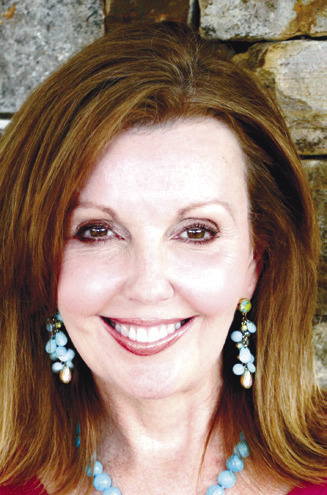
Ronda Rich is the bestselling author of the Stella Bankwell series. Visit www.rondarich.com to sign up for her free weekly newsletter.