
When you call 911 and report a fire, you set in motion a chain of events firefighters train for almost relentlessly.
Once the location and nature of the fire have been determined, a variety of fire apparatus are dispatched.
According to Morgan Fire Chief Garret Smith, the skills involved in getting to the fire and setting up equipment properly are among the most important a firefighter has in their toolbox.
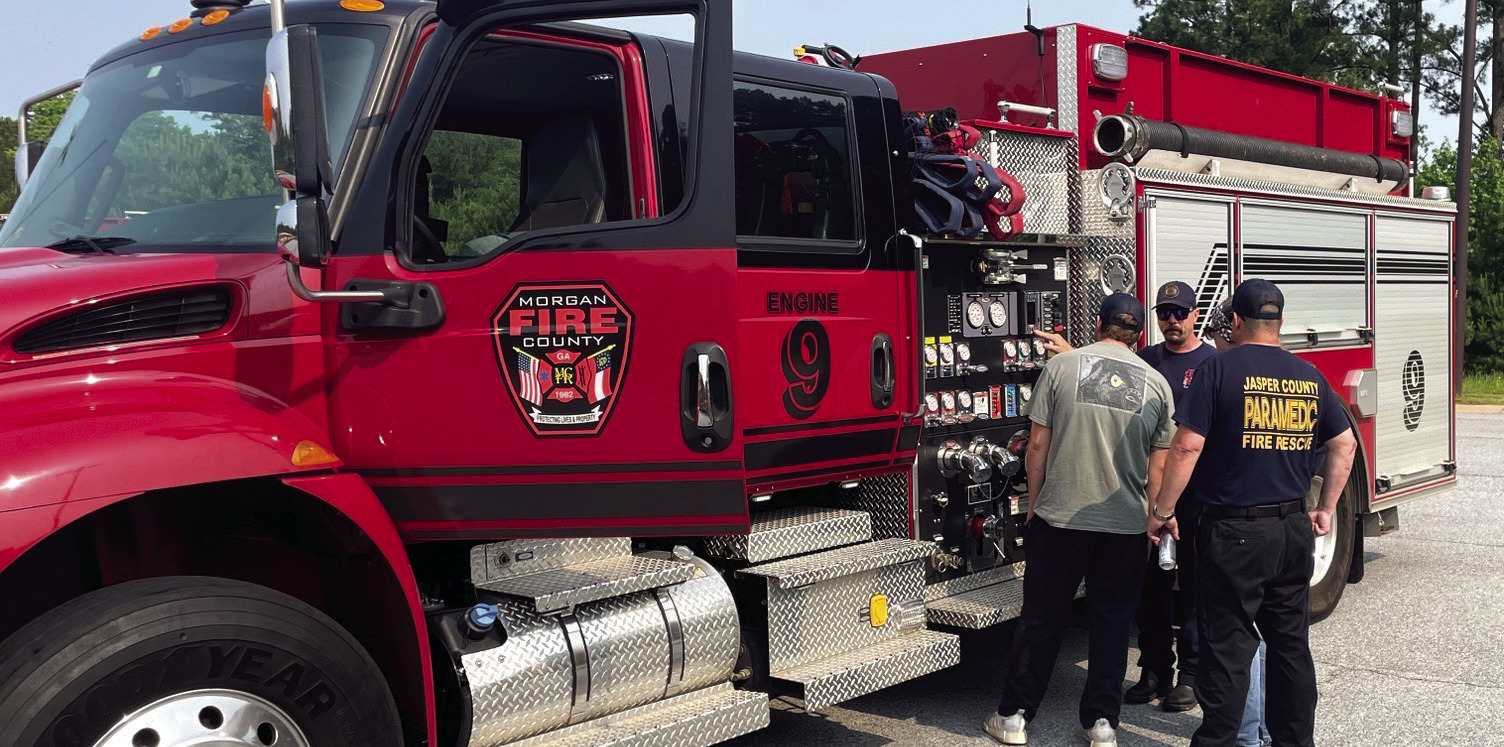
To that end, members of Morgan County Fire and Rescue recently completed a training course that culminated in eight students earning National Professional Qualification Pump Apparatus certificates. More than 20 students began learning to operate squads in March. A dozen had moved on to the Basic Pumper Operation class in May, with eight able to finish the complete 120-hour course.
Volunteers attend class for three to four hours on Tuesday and Thursday nights and for six to eight hours on Saturdays.
According to Battalion Chief Allen Hagler, the MCFR teams hope to train another class next year.
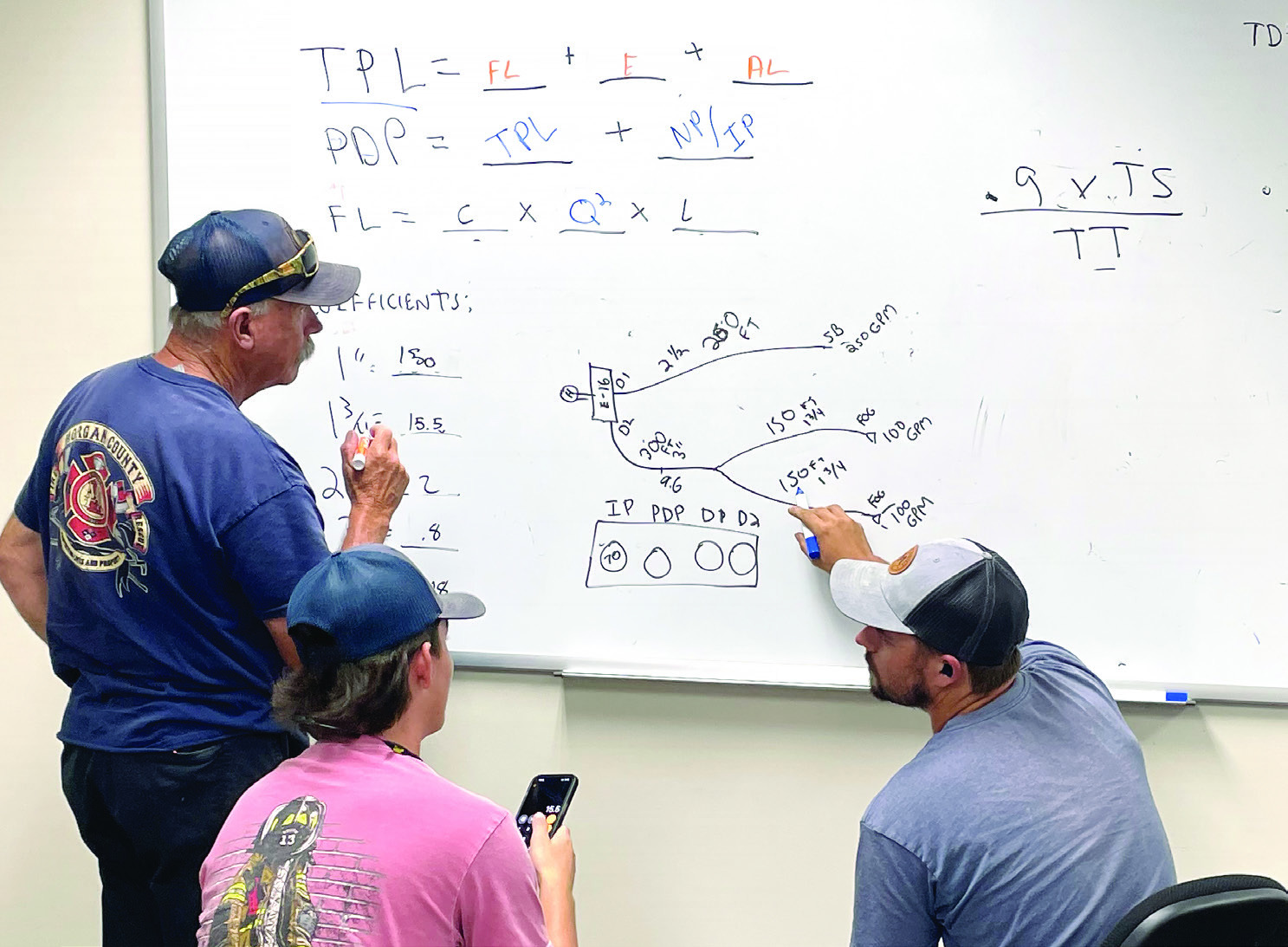
“The training gives firefighters the knowledge to operate the truck on a fire scene,” Hagler said. “It’s not just driving the truck. It’s getting there, how to pump the hoses, the different pressures to pump them at, and to give them that problem-solving ability in case something arises that they need to fix on the spot. When we’re out flowing 200 gallons a minute off a hose line and there is a fluctuation in pressure, it could seriously injure or kill someone. There are countless math formulas involved in determining how much friction the water creates in the hose line. We have to calculate that in to get the correct pressure at the nozzle. When we get on scene, we know what pressure to pump. We have to make split-second decisions.”
Hagler said the training is invaluable to veteran firefighters and rookies alike.
“Even I, as an instructor, had to go back and catch up on how to do the formulas,” Hagler said.
According to MCFR administrative assistant Cindy Williams, the class makes firefighters understand how to position the truck. Hence, it’s not intrusive to what’s happening on the scene and where lines need to be dropped.
“We have to take into consideration how we are going to get water to that truck,” Williams said. “Because most of the time we have to bring water to the scene. There are a lot of things that the driver of that apparatus is thinking about before arriving on the scene. And once you do get it on scene and have all that in play, it’s not easy to break down and move. If he’s made a mistake or misjudges where to set up operations, breaking it down and moving it can cost precious time.”
Williams said that firefighters also have to be ready for any eventuality when dealing with mechanical apparatus that can malfunction.
“Things happen, so how do you overcome that when you are in the middle of an operation?” Williams said. “You might have firefighters that are inside a structure, and if something happens, time is definitely of the essence to get them out to safety if you’re not going to be able to supply them with water.”
According to Hagler, new systems can be operated wirelessly for added efficiency.
“Instead of running back to the pump panel to charge everything, they can click buttons on the nozzle, and it will send a signal to the head unit saying I need to shoot water to that nozzle, and it will remotely open the valve,” Hagler said.
Firefighters also learn about different types of trucks and equipment — some with air brakes and others without — and working ladder trucks like the one owned by the City of Madison.
And getting to the fire scene is also covered in the training.
While most motorists move to the side of the road when they see flashing lights and hear sirens, some can become unpredictable and cause unnecessary delays.
According to Hagler and Williams, lights and sirens are actually a polite way of asking for room to do the job. A conversation between civilian vehicles and rescue vehicles might go something like:
“Say, I’d like to roll through this traffic signal if you folks don’t mind.”
“Certainly, we’ll pull over and let you pass.”
“Thank you, kind sirs. You have our gratitude.”