
GREENE COUNTY

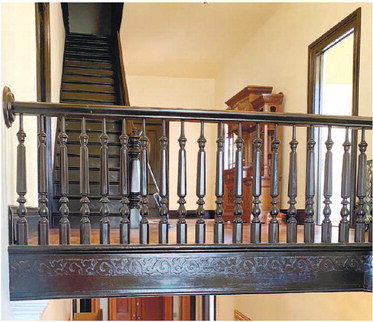
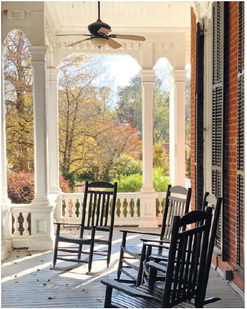
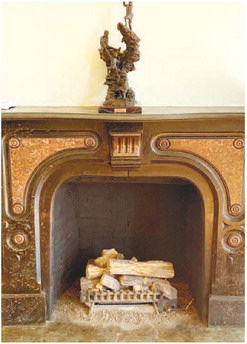
A true Southern mansion built in 1874—featuring 22 rooms, 14 fireplaces, a gleaming mahogany staircase, original floors, decorative Doric white columns, and other stunning details unique to its age—has been sold in Greensboro after many years of sitting idle.
Reminiscent of earlier times in the city, the Davis House boasts an imposing presence at 106 Laurel Avenue.
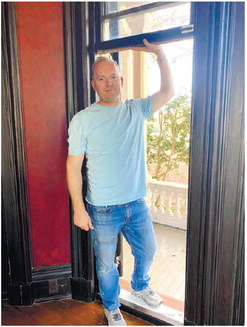
The new owners are Bart and Stephi VanStekelenburg. They have lived in Greensboro for the last seven years and have been eyeing the purchase all that time.
Bart VanStekelenburg has a passion for old and historic homes that rival even the best of modern features. He appreciates the history and charm of these older homes and is keen on original detail and restoration.
“I have always appreciated historic properties,” VanStekelenburg said. “Growing up, my mother shared a similar passion and our family lived in such properties in both Maryland and Pennsylvania. Heart pine floors, architectural adornment, and intricate stone and brick are key hallmarks that bring a level of character to these properties that you rarely find in new construction.”
The VanStekelenburg family relocated from Costa Rica seven years ago, drawn to the area after having lived here earlier with his parents.
Along with his parents, he lovingly restored a late-1800s-era home located just behind the Oconee Brewing Company at 201 West Greene Street.
Greene County was the 11th county to be established in Georgia and the only one in 1786. The county was in existence three years before George Washington was elected as the first president of the newly formed United States.
Named for General Nathanael Greene, a highly respected Revolutionary War patriot, Greene County has many old properties that have been elegantly restored. Prior to 1820, many homes here were of log construction and featured open verandas.
The Victorian era was ushered in between 1837 to 1901 and helped create a new and emerging America with homes unique to its era. Victorian architecture heralded an age of both Gothic and Romanesque styles, featuring soaring ceilings, ornate fireplaces, steeply pitched roofs, ornate gables and sliding sash windows.
Other features included multiple home levels, bumped-out bay windows, crown molding, wide floorboards and red brick exteriors.
“The city of Greensboro, like many other rural southern towns, was once an important destination in Georgia,” VanStekelenburg pointed out. “To put it into perspective, Greensboro was connected to Augusta by railroad before trains ever arrived in Atlanta.
The city had a thriving economy with the cotton industry, buggy shops, a pistol and candy factory, tanneries, and more. It was comprised of many well-to-do families and outlaying farms.”
VanStekelenburg took possession of the Davis House and the adjoining early 1900s “Grand Oaks” home two months ago.
Combined with a seven-stall horse barn and original outbuildings, the property sits on 52 bucolic acres of rolling hills, oaks, and prime pastures.
“I have been told this was one of the first homes to have running hot and cold water in the state of Georgia,” he said. “The cistern remains in the attic and once provided gravity-fed water to marble sinks in each bedroom. The home also had two full bathrooms when originally built.”
VanStekelenburg has a poetic vision for the home and sees potential for reclaiming its past.
“I can envision beautiful white fence lines along the frontage, reclamation of its historic features, and horses grazing the surrounding pastures,” he said. “I see it as bringing back a small bit of history and reclaiming its past grandeur to the city.”