
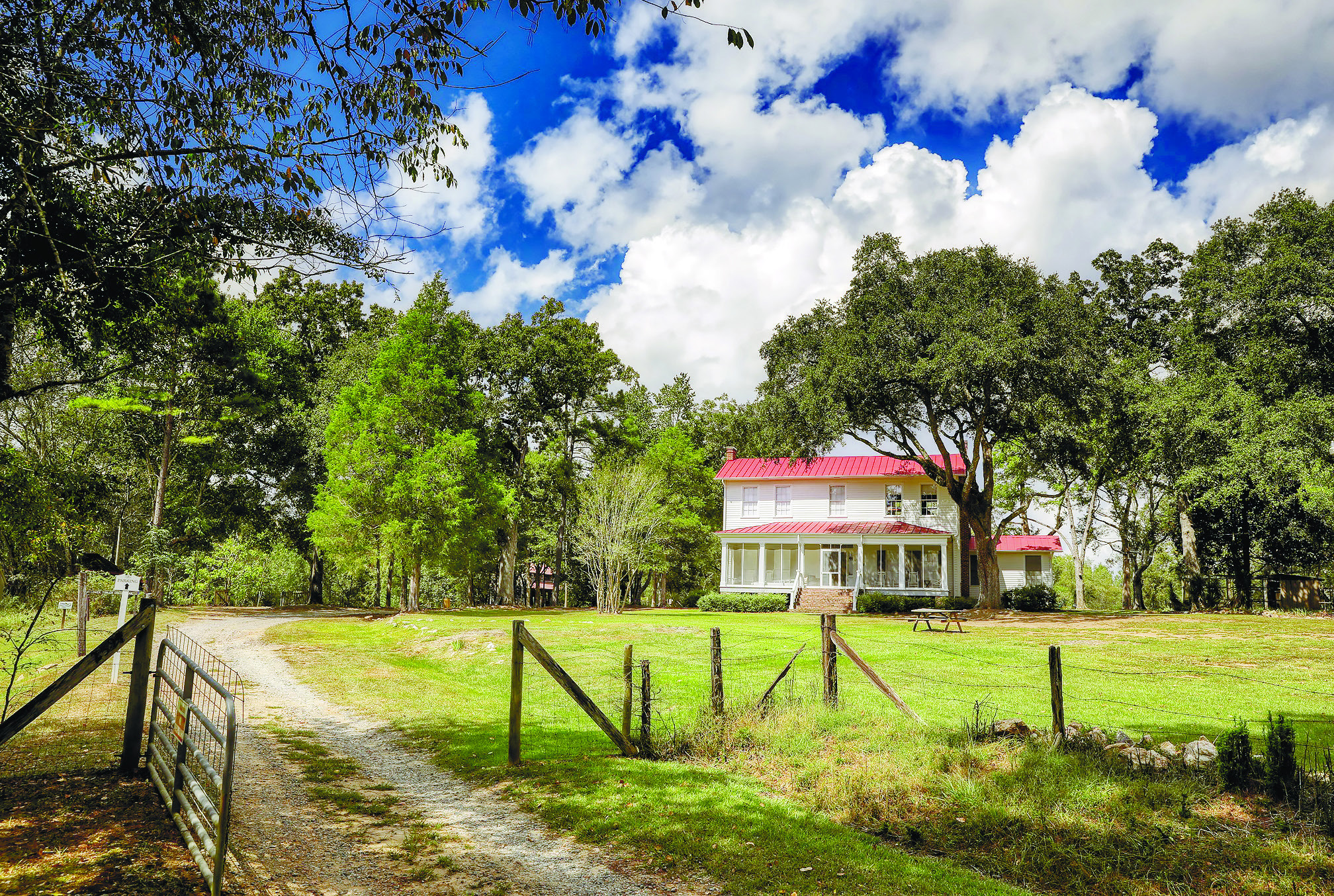
Last Thursday, two veterans of the 2023 Flannery O’Connor Summer Institute at Georgia College gave a Zoom presentation about Flannery O'Connor and Andalusia Farm in Milledgeville.
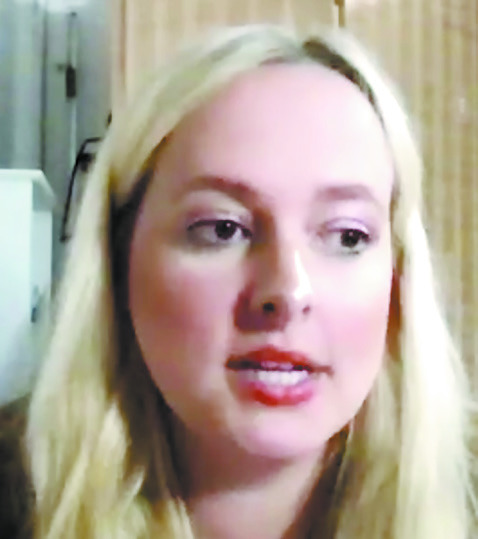
The presenters were Ashley Massey and Timothy R. Vande Brake. According to her biography, Massey holds a Master of Arts in Literature and writes academically in the fields of Southern Gothic literature and Critical Prison Studies. She also teaches writing and literature courses in jails and prisons. She recently released a gothic farm-themed poetry book, Keep the Gate Open.
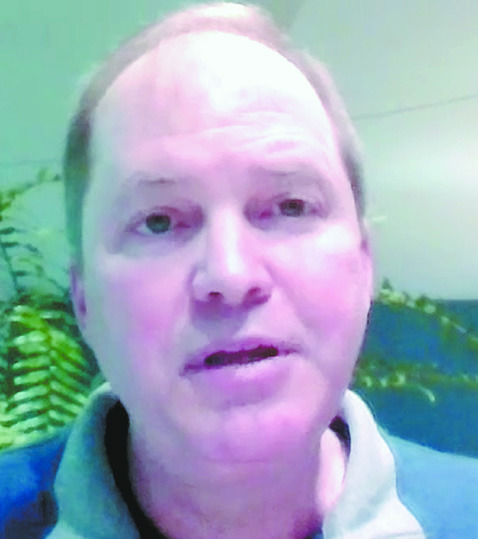
Brake is a professor of English at Roberts Wesleyan University in Rochester, N.Y. He has multiple publications, including work in the Flannery O’Connor Review. He holds degrees from Calvin University (BA), the University of Tennessee, Knoxville (MA), and the University of Alabama (PhD).
Massey and Brake have been studying O’Connor over the last year since the summer institute, “Reconsidering Flannery O’Connor.”
The National Endowment for the Humanities has supported their research. However, at the beginning of the meeting, it was clarified that “views expressed at this event do not necessarily represent those of the National Endowment for the Humanities.”
Massey studied and presented a short slideshow explaining how a farm can be a gothic setting and how O’Connor’s depictions of Andalusia Farm support this.
She asserts that a farm functions as a character itself, feeling anxiety for its owners and workers. This anxiety manifests in women in O’Connor’s stories and their children, who must choose to either inherit these anxieties or seek refuge in the city.
“This once familiar place can incubate into a place of exile,” explained Massey, touching on the gothic elements and themes.
Some of these gothic elements include bad weather, different kinds of decay, foreboding, and dread, and the depictions of the themes of intrusion, disruption, loss, and isolation portrayed around women in O’Connor’s works.
Massey also related her studies to her personal life, as she worked on a farm in Middle Tennessee. Her discussions opened up to examining how cultural shifts led to the expectation of leaving farm life for the city in the mid-century and to the current trend of most media portraying a “glossed over, hyper traditional, and very filtered” view of the ‘simplistic’ lifestyle of living on a farm.
“Shifts speak to each other,” said Massey. “Flannery offered a more realistic depiction of farm life for women than what is portrayed in today’s media.”
Brake gave a speech on his research into three “moments of discovery” that span a decade of O’Connor’s life and work. These three moments were titled The Land, the Ledger, and The Lens.
When speaking on the land, Brake retold his first visit to Andalusia Farm, long before it was as modern as today. He described its natural greenery and how it was full of sound and life. As he described the development of Andalusia since his first visit, he emphasized the importance of Andalusia serving as a place of nature, a habitat, and a community space with trails and natural beauty.
“Andalusia was and is an oasis of green. This is more apparent each time I go back,” said Brake. “If Flannery had not written there, it (the land) would have been devoured by now … thus it (Andalusia) is a gift for everyone.”
Moving onto the ledger, Brake explains that his research focused on the machinery used around the farm, while many other works focus more on the social and physical relationships around the farm.
“As of June 2023, there were questions about their material life … it is a memorable experience to be lost in the woods (of questions),” said Brake.
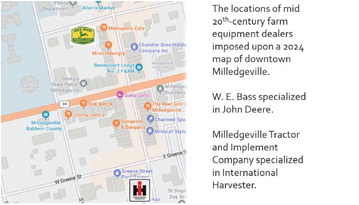
Brake connected with locals in Milledgeville alongside researching through old documents and records to answer questions such as “What was W.E. Bass?” and be able to provide the answer that “it specialized in John Deere.”
He showed participants of the Zoom a present-day map of where 20th-century farm equipment dealers were located.
Brake then analyzed two drafts of The Displaced Person and spoke about their differences, noting how, between the two copies, O’Connor changed the type of machinery mentioned.
“Though O’Connor claimed to sometimes be oblivious to the farm's operations, she could not have missed the entrance of a shiny gray tractor with a power lift ... to Andalusia in March of 1952,” said Brake. “In her fiction, it shows how she was noticing how cuttingedge machines, such as this, could alter human relationships.”
Concluding his speech, Brake spoke about the lens of O’Connor’s works and how he discovered a reference in Good Country People from Existence and Being, a book in O’Connor’s personal library by German philosopher Martin Heidegger.
“Given what we know about O’Connor, it makes perfect sense that she was curious about the philosophy of Martin Heidegger. In her first letters to Betty Hester, she writes that she is a roman catholic peculiarly obsessed with the modern consciousness who writes to an audience that believes God is dead,” said Brake. “Thus Heidegger, a Catholic who has rejected the faith but remains in some ways haunted by it, is not simply an obstacle to be cleared but a thinker for whom to converse … O’Connor’s fiction reveals she had absorbed quite a bit of Existence in Being.”
Brake explains that while O’Connor could not have read Heidegger’s later work analyzing technology, some of his beliefs and concepts are referenced in Existence and Being that O’Connor could have “picked up on.”
He goes on to state that O’Connor’s encounter with Heidegger is the “key to grasping the full import of stories such as The Displaced Person and Good Country “People” because O’Connor views her surroundings through “Heideggerian questions.”
Concluding the presentation, attendee Bruce Gentry asked both presenters if they thought that Flannery enjoyed living on a farm. Massey stated that she believed it was a “love frustration” and had elements that she loved, like her animals, but many more frustrations.
Brake stated that the farm was where she got her material and that he thinks “it was a gift to her, all things considered.”