
PUTNAM COUNTY
The facts are alarming: every 30 seconds an American has a heart attack; every 40 seconds an American has a stroke; and every hour, there are 100 deaths nationwide from vascular disease.
Vascular disease is the leading cause of strokes and heart attacks, which represent the leading causes of death for American adults. In fact, vascular disease is the leading cause of death for adults worldwide. The risk can be reduced, however, by learning about a patient’s vascular health through integrated vascular screening before a stroke or heart attack strikes.
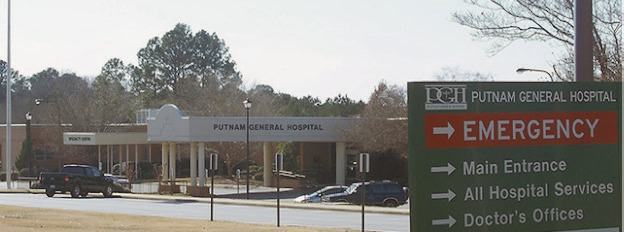
Vascular screening starting at about age 50 can help change a person’s vascular fate by providing information on which to act. To help local residents better know their vascular health, Putnam General Hospital (PGH) will offer integrated vascular screening from 8:30 a.m. to 4:15 p.m. Sept. 20 conducted by AngioScreen with its mobile, non-invasive ultrasound equipment.
In approximately 6 minutes, AngioScreen scans the arteries of a patient’s neck to provide a clear picture of vascular health that can then be shared with their personal physicians. Letting physicians essentially see the inner condition of their patients’ arteries can help lower the risk of heart attack or stroke, as it also provides information about their heart rhythm, neck and leg arteries, and fitness level.
According to the AngioScreen website (angioscreen.com), the entire experience, from initial paperwork to receiving results, typically lasts about 15 minutes.
Each AngioScreen also includes an ankle-brachial index screening test for blockages in the arteries that go to the legs. Such a blockage is called peripheral artery disease (PAD). Estimates suggest up to 10 million people in the U.S. have PAD, but approximately 90 percent of them are not aware. PAD carries a risk of a heart attack equal to a patient who has already suffered a heart attack – even in a PAD patient who has never had a cardiac symptom. Both of these tests are not routinely ordered by physicians unless symptoms are present.
AngioScreen measurements provide an assessment of risk that can be enhanced by consultation with personal physicians, who may recommend other measures of vascular risk and health. It is important to understand, however, that all screening measures have a range of validity, and none are completely accurate or 100 percent predictive.
Following testing, each AngioScreen patient will receive an electronic version of their results on a CD to share with their physician, so even if the paper version of an AngioScreen document is lost or damaged, another copy can be retrieved and printed.
Interested patients should call Tracy Stickley at PGH (706-923-2028) to schedule an AngioScreen appointment for Sept. 20, at the hospital.