
“Don’t know much about history,” was the opening line to Sam Cooke’s 1960 No. 2 hit song. Why should you care about the history of Putnam County? It can make you a more informed citizen with a stronger sense of belonging to a community.
And it helps create a “Wonderful World,” the title of Cooke’s hit song.
Here is the start of our story from the Voices and Votes Smithsonian Exhibit, now on display at the Putnam County Administration Building.
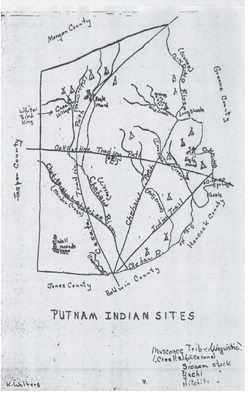
Long before the iron plow scored the earth, the sunlit Piedmont of Georgia belonged to the Muscogee Nation. To them, the land was a living partner — a cherished homeland vibrating with the spirit of their ancestors.
Yet the relentless tide of European expansion brought a tragic eclipse to this harmony. The Oconee River, once a tranquil artery of life, was transformed into an ever-changing frontier.
It became a boundary where the fierce agrarian dreams of a restless new democracy collided with the sacred sovereignty of the Muscogee. When you hear the old phrase, “Lord willing and the Creek don’t rise,” remember it had nothing to do with water.
Driven to desperation by the abuses of the deerskin trade and the enslavement of their families, Native tribes revolted against settlers in the Yamasee War of 1715. The devastating fallout forced the indigenous Oconee people to abandon their beloved river and village south of Milledgeville and begin their exodus into Florida to form a village they named Cuscowilla.
Following the American Revolutionary War, the settlers’ hunger for territory became insatiable. The Treaty of Augusta took the land between the Savannah and Oconee rivers from the Muscogee hands. Charmed by the Headright System, which promised up to 1,000 acres to new households, a flood of pioneers poured westward, planting the roots of a new empire upon ancient soils.
Seeking to calm the tempest, the Treaty of New York bound the Muscogee under federal protection, drawing a fragile line in the wilderness.
Ultimately, the Oconee River flows as a poignant monument to Georgia’s birth — a breathtaking landscape forever defined by both the mounting passions of a new world and the haunting tragedy of Native American displacement.