
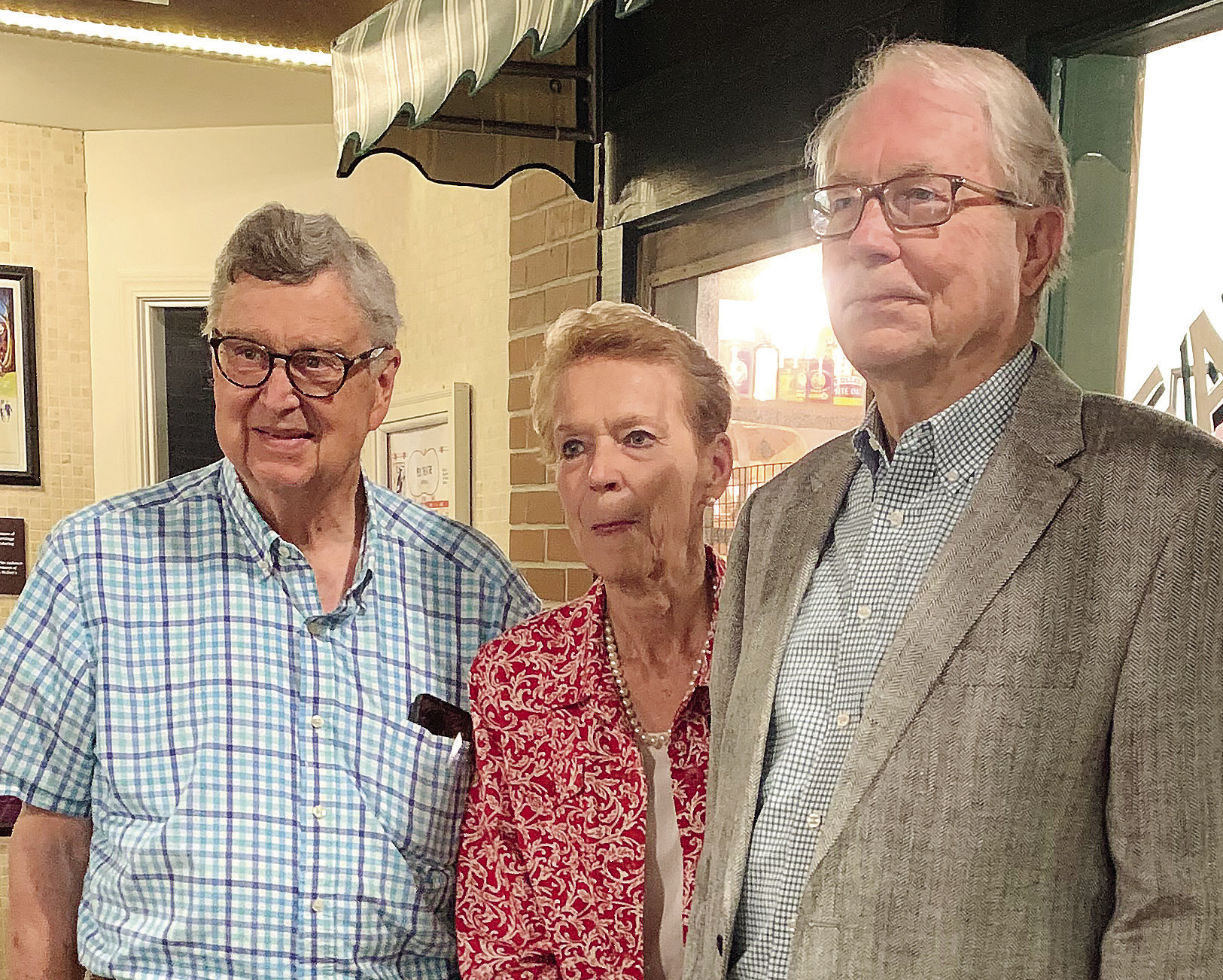
The do’s and don’ts of genealogy, plus some entertaining anecdotes from digging around in his own family’s past, is what Decatur genealogist Kenneth Thomas brought to the table – actually, the podium – at last Sunday’s quarterly Sunday-at-the-Museum lecture.
The Old School History Museum sponsors the series, and Thomas’ lecture was co-sponsored by the Eatonton-Putnam Historical Society.
For 33 years, Thomas’ “day job” has been at the state Department of Natural Resources, mainly researching records for houses and historical markers, but for his talk here, he relied upon a lifetime of experience and service in the genealogy field.
Thomas has received awards, including the Georgia Historical Society’s for lifetime achievement; served on boards, including for The Wren’s Nest, Joel Chandler Harris’ Atlanta home; and spent 47 years writing a genealogical column for the Sunday edition of The Atlanta Journal-Constitution, now the longest-running genealogical column in the country.
His talk here was originally billed as “Climbing the Family Tree,” but he changed the emphasis to “Genealogy in the 21st Century,” implying the burgeoning possibilities of the Internet and DNA in modern genealogical searches.
Thomas packed nearly a dozen broad topics into the hour-long lecture delivered from The Plaza stage. He began with home sources, interviews, and writing, then advanced to online sources, libraries, and archives, before moving on to newspapers, books, and DNA searches.
For beginners, Thomas said to start with what you or your parents or near kin might have at hand, like birth, death, or marriage certificates. In interviews with Grandpa or Aunt Lucy, write down what they say – and include whatever question they may be answering.
“Sources of information are critical and useless without sources. Places/ locations are a must,” he wrote in a handout.
“It is your history,” he said, suggesting that family history is “the underpinning of all history.”
The trouble is, even when other family members urge “writing a book” after gathering information, “nobody buys the book, even if they are in it.”
As a general observation, research holds its own personal satisfactions (and frustrations) in piecing together the richness of a story, but, Thomas added, “genealogy is not free.”
Such is the case with online sources. Small, quiet armies of librarians and archivists daily add digitized documents available for easy searching at home or at public libraries. However, there is often a cost. Websites like Ancestry.com (“a must,” according to Thomas) and Newspapers.com carry fees. FamilySearch.org and the University of Georgia’s Digital Library of Georgia (for Georgia’s pre-1920s “historical newspapers”) are free.
Although hundreds of websites now exist, Thomas specifically mentioned FOLO3.com for military records as especially rich, with links to other sources.
Likewise, virtually all of Georgia’s public libraries have a “genealogy room.” Thomas called Macon’s library “the best in the state for genealogy,” with Columbus not far behind.
Thomas added that useful information can be found almost anywhere and in some unusual forms, too, such as baby books, merchants’ account books, slave schedules in the 1850 and 1860 federal censuses, Civil War pension applications, family Bibles, and city directories.
“You can’t find the information if you don’t know it exists,” Thomas said.
Courthouses are record-keeping machines, too, with wills, estate inventories, deeds, tax rolls, court dockets and minutes, and much more to research.
“Sometimes you are lucky; sometimes you learn the courthouse burned back in the 1880s,” he said. “Be careful,” Thomas added, and that advice extends to your own assumptions.
He pointed out that some people cannot afford a tombstone, while others may not want one. Also, the location of a family cemetery can sometimes be difficult to find, so write it all down, he added.
When initially cleaning out an older person’s longtime home, do not throw away anything, Thomas cautioned. A seemingly innocuous handful of letters tucked away in a drawer can have dates, addresses, and even stamps that add to a story.
Thomas suggested that you be meticulous, curious, and studious in your searches, and your genealogical truth will eventually be revealed.